The San Mateo Logroño Festival: Dates, Events, and Wine
San Mateo in Logroño runs for about a week in late September, centered on the wine harvest or vendimia. Expect concerts, parades, grape crushing, and street tastings across the city’s historic core during the festival period. The Ayuntamiento de Logroño’s official 2026 program lists the confirmed dates, and it’s the source to check before you book flights.
TL;DR:
- Flying from the U.S. requires arriving a day early due to the September 19 opening rocket event, which draws the largest crowds.
- The festival is concentrated in walkable zones like Paseo del Espolón, Calle Laurel, Plaza del Mercado, and Plaza de Toros, requiring early booking of accommodations and transportation.
- Key events include the chupinazo, grape crushing, religious offering, parade of floats, and concerts, with bull events posing safety risks for children and spectators.
- Peak crowd and street closures happen in the late afternoon and evening, making early arrival and planning essential for a smooth experience.
- Booking a private driver ahead of time is highly recommended to navigate street closures, especially for airport transfers and bodega visits outside the city.
Table of Contents
- When and Where Does the San Mateo Logroño Festival Happen?
- What Are the Signature Events at San Mateo?
- What Does San Mateo Actually Feel Like on the Ground?
- How Do You Handle Travel Logistics During Festival Week?
- Where Should Wine Lovers Focus Their Tasting Time?
- Why a Private Driver Makes Sense During San Mateo
- Why Does San Mateo Matter to Logroño’s Identity?
- What Does a Typical Festival Day Look Like?
- What Traditions and Etiquette Should Visitors Respect?
- Can Visitors Join a Peña for the Festival?
- When Is the Best Time of Day to Attend San Mateo Events?
- A Realistic 48-Hour Visit to San Mateo
- Book Your Ride Before Festival Week Fills Up
- Sources
- FAQ
When and Where Does the San Mateo Logroño Festival Happen?
Local reporting has pointed to September 19 through 25, 2026, with the chupinazo (opening rocket) set for Saturday, September 19, shifted to a weekend to draw a bigger crowd. That single detail matters if you’re flying in from the United States: land a day early, because the opening moment sets the tone for everything after it.
The city doesn’t scatter San Mateo across neighborhoods. It concentrates the festival in a handful of walkable zones, which works in your favor if you’re staying centrally.
- Paseo del Espolón — the main square, home to the chupinazo and most large public gatherings.
- Calle Laurel — the pincho district, packed morning through midnight.
- Plaza del Mercado — near the cathedral, used for religious processions and smaller acts.
- Plaza de Toros — hosts bullfighting events and some concert programming.
Dates shift by a few days year to year, so always cross-check the current municipal program PDF rather than relying on last year’s calendar.
What Are the Signature Events at San Mateo?
Five moments define the week, and knowing what each one actually involves helps you decide where to spend your limited days.
- The chupinazo (cohete). A rocket fired from the balcony of the Ayuntamiento marks the official start. Arrive at Paseo del Espolón at least 45 minutes early. It gets shoulder-to-shoulder fast.
- Pisado de la uva. Costumed participants crush grapes by foot in a wooden vat, a direct callback to pre-industrial Rioja winemaking.
- Offering to the Virgen de Valvanera. The first must from that crushing is presented to the Virgin in a solemn procession, the closest the festival gets to its religious roots before the harvest theme takes over.
- The parade of carrozas. Floats and vendimiadora proclamations move through downtown streets, part civic pride and part harvest theater.
- Concerts and Espacio Peñas. Headliner acts play designated stages while peñas run their own tented spaces with music, food, and open access most nights.
Bull-related events (encierros and corridas) run at the Plaza de Toros and carry real physical risk for anyone entering the ring area. If you’re bringing kids, watch these from the stands only, and check posted age guidance before buying tickets.
Pro Tip: Watch the pisado de la uva from the edges of Plaza del Mercado rather than pushing to the front. You get a clean sightline and an easier exit if the crowd builds.
What Does San Mateo Actually Feel Like on the Ground?
Daytime San Mateo is relaxed. Families fill the squares, market stalls sell local produce, and Calle Laurel operates more like a lunch crowd than a party. That changes fast after 9 p.m., when Calle Laurel and Calle San Juan turn into a slow-moving river of people bar-hopping for pinchos and small glasses of Rioja.
The pincho crawl is the real social engine of the festival. You order one small plate, one glass, then move to the next bar, and repeat for hours. Nobody sits down for a full meal at 8 p.m.; dinner blends into the crawl itself.
- Calle Laurel and Calle San Juan carry the densest foot traffic after dark.
- Side streets just off Plaza del Mercado stay noticeably quieter and still serve excellent pinchos.
- Peñas (private social clubs with tented spaces) open their doors to the public for food and music, giving outsiders a genuine slice of local tradition rather than a tourist-facing version of it.
If crowds aren’t your style, mornings and early afternoons give you the market stalls and the historic quarter without the density.
How Do You Handle Travel Logistics During Festival Week?
Bilbao Airport is your most practical U.S. connection point, roughly 90 minutes from Logroño by road. Madrid works too, though it adds train or drive time; Logroño-Agoncillo regional airport has limited commercial service. Whichever route you pick, build in a buffer day, since road closures around the festival core start days before the chupinazo.
Book accommodation now, not later. Rooms near the casco antiguo (old town) or close to Paseo del Espolón disappear first, and prices climb the closer you get to September.
- Public transit runs on a reduced or rerouted schedule during peak festival days.
- Street parking near the historic center is largely unavailable once barricades go up.
- Pickpocket risk rises in dense crowds, so keep valuables in front pockets or a crossbody bag.
- Spain uses the euro; carry some cash, since smaller pincho bars and peña tents don’t always take cards.
- Free street events (chupinazo, parades, peñas) need no ticket, but headliner concerts and bullfighting often require advance purchase.
Pro Tip: If your hotel sits outside the closure zone, arrange a fixed pickup point with your driver ahead of time. Trying to flag transport near the parade route on the fly rarely works.
Where Should Wine Lovers Focus Their Tasting Time?
Street tasting stalls scattered through the festival zone pour by the glass with zero planning required, but they only scratch the surface of what Rioja offers. A proper D.O. Rioja bodega tasting, whether a cellar tour, a vertical tasting across vintages, or a barrel-sample session, needs a reservation, and festival week fills those slots quickly.
The strongest itinerary blends both worlds. Spend the morning at the artisan market near Plaza del Mercado, head to a bodega for a guided tasting in the early afternoon before the streets get loud, then return for an evening pincho crawl once the crowds and the music pick up.
- Book any winery visit at least two to three weeks ahead for festival dates.
- Pair a young Rioja Crianza with grilled mushrooms or chorizo pinchos.
- Save a Reserva or Gran Reserva for richer plates like slow-cooked lamb or aged cheese.
- Ask your host which side streets have quieter tasting bars if the main strip feels too packed.
Why a Private Driver Makes Sense During San Mateo
Festival week turns Logroño’s street grid into a moving puzzle. Roads close with little warning around the parade route, taxis get scarce right when you need one, and walking a mile in festival crowds with luggage is nobody’s idea of a good start to a trip. A private chauffeur with local knowledge of the closures solves that friction directly.
RiojaBlack runs a fleet of Mercedes-Benz and Tesla vehicles out of Logroño, covering airport transfers, wine-tour routes, and event transfers for exactly this kind of week. A driver who already knows which streets go dead by 6 p.m. saves you the guesswork.
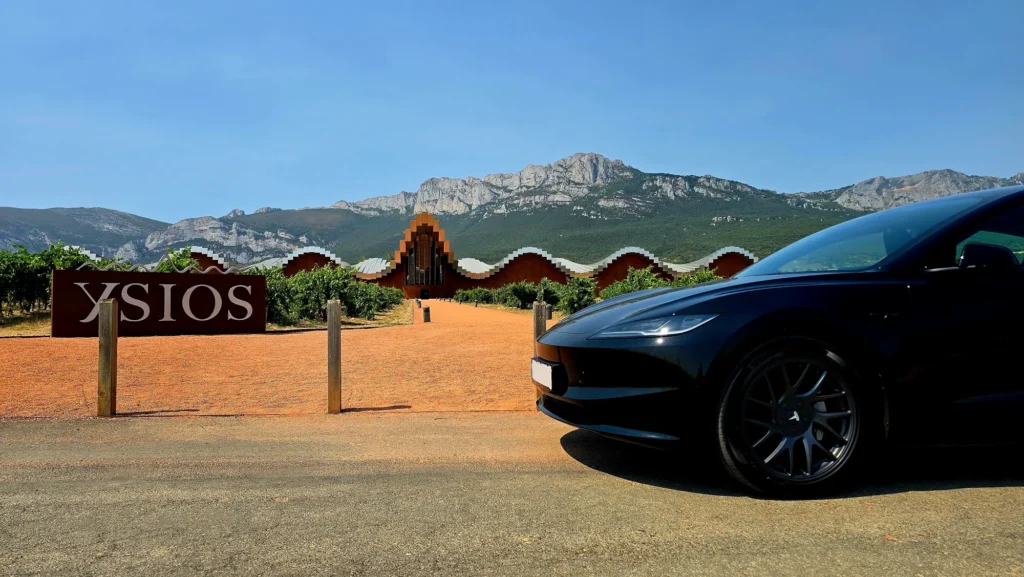
Reserve your pickup and drop-off points well before the festival starts, confirm luggage and group size in advance, and if your plans include a bodega visit outside the city, ask about routes to nearby towns like Haro. Early booking matters more here than almost anywhere else in Spain’s festival calendar, since demand for reliable transport spikes the same week hotel rooms do.
Why Does San Mateo Matter to Logroño’s Identity?
San Mateo began as the city’s harvest festival, a way to mark the end of the grape season in a region where wine defines the economy as much as the culture. Unlike many Spanish town festivals built around a patron saint’s feast day, San Mateo leans harder into the vendimia than into religious observance, even though the offering to the Virgen de Valvanera keeps that thread alive.
That distinction shapes everything about how the week is programmed. Rather than a solemn procession-heavy calendar, San Mateo mixes agricultural ritual with genuine street party energy, concerts, peñas, and communal eating built around the grape harvest itself. For a city whose surrounding vineyards produce some of Spain’s most recognized wine, celebrating the harvest in public, with grape crushing performed by hand in front of a crowd, connects modern Logroño directly to centuries of rural winemaking practice.
The festival also functions as a civic identity marker. Locals take pride in it the way other cities take pride in a founding date or a famous export; here, the export is bottled and the pride shows up in a week of open doors, from peña tents to family-run bodegas welcoming strangers in for a taste. Visitors who understand that context read the week differently. It’s not simply loud music and grape juice underfoot. It’s a working region publicly marking the moment its main product comes in.
What Does a Typical Festival Day Look Like?
Days follow a loose but recognizable rhythm across the week, and knowing that rhythm helps you plan around it instead of getting swept along by accident.
Mornings start slow. Market stalls open in the historic quarter, family-oriented programming (games, smaller performances, sports like pelota) runs at midday, and this is genuinely the calmest window to visit with children or simply avoid a crowd. Early afternoon is prime time for a bodega tasting, since streets haven’t filled yet and drivers can still move through town easily.
By late afternoon, energy builds. Parades and proclamations tend to run in this window, and peñas start opening their tented spaces. Evening brings the pincho crawl into full swing along Calle Laurel and Calle San Juan, followed by concerts and Espacio Peñas programming that often runs past midnight. The chupinazo itself, plus any Saturday-anchored kickoff events, draw the single largest single-day crowd of the week, so treat opening day as a special case rather than a preview of daily volume.
Exact timing shifts by a day or two year to year, which is why the municipal program remains the only fully reliable schedule once you land.
What Traditions and Etiquette Should Visitors Respect?
San Mateo welcomes outsiders warmly, but a few unwritten rules keep that welcome genuine rather than transactional. The offering to the Virgen de Valvanera is a solemn moment for many locals, even within a festival otherwise built around celebration; watch respectfully rather than treating it purely as a photo opportunity.
Peña tents deserve particular care. These are member-run social clubs that open to the public during San Mateo, not commercial venues, so basic courtesy (a thank-you, patience in line, not treating staff like hired help) goes a long way. Pincho bar etiquette matters too: order, eat standing, pay, and move on. Lingering at a packed bar during peak hours blocks the exact flow that makes the crawl work for everyone.
Dress code stays casual across almost every event except formal bodega tastings, where smart casual reads better. And if you’re near the bullring, understand that corridas are a serious cultural tradition for many locals, whatever your personal view of them, and loud objection in that specific setting will land badly. Save any strong opinions for a quieter conversation.
Can Visitors Join a Peña for the Festival?
Peñas are private social and cultural clubs, often multi-generational, that organize much of San Mateo’s evening programming. Formal membership generally isn’t open to short-term visitors, since most peñas recruit through family and long-standing community ties rather than open enrollment.
That said, nearly every peña opens its tented space to the general public during festival week, serving food, pouring wine, and running music long into the night with no membership required to walk in. This is the most realistic and rewarding way for a traveler to experience peña culture directly: show up, order something, strike up a conversation if the moment allows, and treat it as a guest at someone else’s party rather than a customer at a bar. Some travel operators and local guides can arrange introductions to specific peñas for a more curated visit, which is worth asking about if you’re working with a local host or driver already.
When Is the Best Time of Day to Attend San Mateo Events?
Late September in Logroño typically brings mild days in the high 60s to low 70s Fahrenheit and cooler nights, comfortable for walking but worth layering for after dark. Rain is possible but not the norm, so pack a light jacket rather than heavy gear.
Timing your day around the weather and the crowd overlaps more than you’d expect. Midday sits at the sweet spot for outdoor market browsing and family programming, warm enough to enjoy without the evening crush. Early-to-mid afternoon is the best window for a bodega visit, since the temperature is comfortable for a vineyard walk and the streets haven’t filled with the evening crowd yet. Save direct sun exposure for morning market time rather than the open squares at 2 p.m., when shade gets scarce.
Evenings cool off enough that a light jacket over festival clothing makes the pincho crawl comfortable past midnight. If you’re planning to catch the chupinazo or a major concert, arrive well before start time. Both the crowd and the temperature drop are easier to manage with a head start than a scramble.
A Realistic 48-Hour Visit to San Mateo
Land the afternoon before the festival’s main events start, drop your bags, and ease into a pincho crawl along Calle Laurel that evening. Day two, catch a flagship event like the pisado de la uva at midday, then head to a bodega for an afternoon tasting before the streets fill again. Close the night at a peña tent with local music.
Pack layers, comfortable walking shoes, and patience for crowds. Show up curious, not performative, and the week gives back more than any single itinerary can promise.
— Ignacio
Book Your Ride Before Festival Week Fills Up
Skip the scramble for a taxi during road closures. RiojaBlack’s private wine-tour and airport transfer service puts a Mercedes-Benz or Tesla and a driver who knows Logroño’s festival-week detours at your disposal, door to door, with room for luggage and small groups. That local routing knowledge is worth more during San Mateo than any app-based ride option, since drivers can plan around closures before you even land. The same principle applies to any luxury trip planning, as general guidance on private transfer value for discerning travelers points out.
Reserve your pickup for opening day and your airport transfer home now, before the same week’s demand pushes availability tight. Confirm your pickup point near, but not inside, the parade route, and mention any bodega stops you want folded into the route. Book directly through the Transfer Logroño page to lock in your dates.
Sources
- Rioja Wine Harvest Festival. 19/09/2026. Fiestas in Logroño
- Fiestas de San Mateo 2026 Ayuntamiento de Logroño
- El disparo del cohete de San Mateo será el sábado 19 de septiembre | La Rioja
- Fiestas San Mateo Logroño (Vinofestivals)
FAQ
What Is the Biggest Festival in the United States?
There’s no single festival crowned largest, since rankings depend on whether you measure by attendance, duration, or cultural reach; Mardi Gras in New Orleans and the Rose Parade in Pasadena are commonly cited among the biggest by attendance.
What Is Logroño Famous For?
Logroño is the capital of La Rioja and sits at the heart of Spain’s most recognized wine region, known for its Rioja wine production, its pincho bar culture on Calle Laurel, and the San Mateo harvest festival each September.
What Is the Biggest Wine Festival in the United States?
Definitions vary depending on region and format, but events like Napa Valley’s harvest celebrations and various state-level wine festivals across California and Oregon draw some of the largest crowds among U.S. wine events.
What Wine Festivals Are Happening in Spain in 2026?
San Mateo in Logroño, expected around September 19 through 25, 2026, stands as Rioja’s flagship harvest festival, alongside smaller vendimia celebrations across other wine towns in La Rioja like Haro.
Do I Need a Car During San Mateo?
Renting a car adds stress once road closures start, and a private chauffeur service like RiojaBlack handles airport pickups and bodega routes without the parking and navigation headaches self-driving creates.