Autor: RiojaBlack

  • What Is a Black Car, Exactly?

    What Is a Black Car, Exactly?

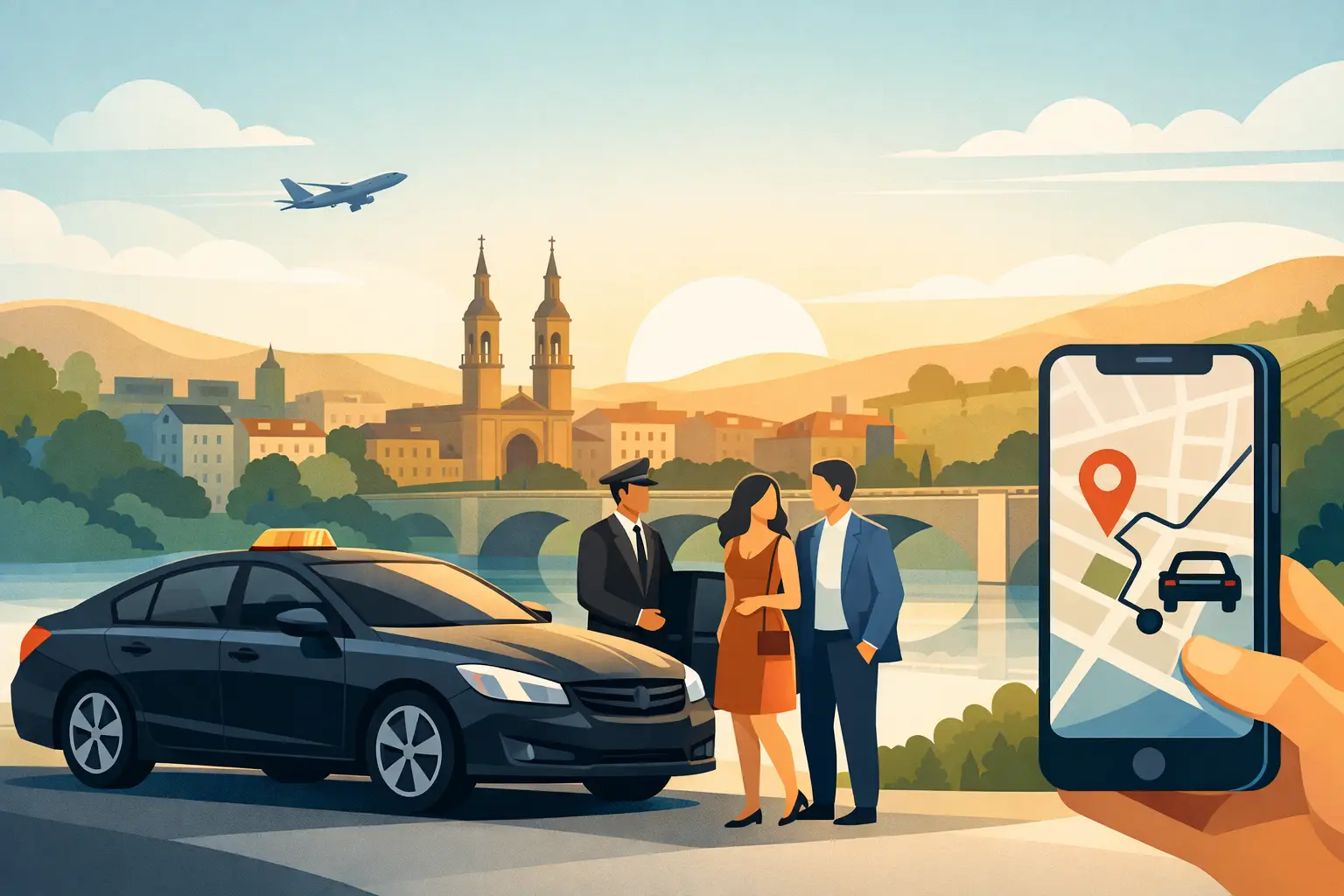
    If you are comparing premium transportation options and asking what is a black car, you are probably not looking for the cheapest ride on the curb. You are looking for something more controlled, more polished, and more aligned with the way you want to travel – whether that means arriving at a meeting composed, reaching the airport without friction, or turning a special evening into a first-class experience.

    A black car is not simply a car that happens to be painted black. In transportation, the term refers to a pre-arranged premium vehicle service, typically with a professional chauffeur, elevated service standards, and a noticeably different experience from a standard taxi or app-based ride. The name comes from the traditional use of black luxury sedans for executive travel, but the meaning today is broader: privacy, discretion, punctuality, presentation, and comfort.

    What is a black car service?

    At its core, black car service is chauffeured private transportation designed for clients who expect more than point A to point B. The vehicle is usually a late-model premium sedan, SUV, or luxury van. The driver is not simply available for the next fare – the trip is booked in advance, the route is planned, and the service is delivered with a hospitality mindset.

    That distinction matters. A taxi is built around availability. A rideshare is built around convenience. A black car service is built around standards.

    Those standards usually include a professionally presented chauffeur, a high-end vehicle, clean interiors, punctual pickup timing, direct communication, and an overall experience centered on calm efficiency. In many cases, black car service also includes airport meet-and-greet, assistance with luggage, bottled water, onboard charging, and quiet, comfortable travel that feels more like a private lounge than ordinary transport.

    What makes a black car different from a taxi?

    This is where the term becomes useful. Many travelers hear «private car» and assume it is just a nicer taxi. It is not that simple.

    A taxi is designed for immediate urban mobility. It is practical, functional, and often regulated around metered fares and street pickups. For many everyday trips, that works perfectly well. But the experience is usually transactional. Vehicle quality varies. The driver may or may not know the details of your schedule. The ride begins when you get in.

    A black car service begins before the vehicle arrives. Your reservation is already in the system. Pickup time, destination, flight details, and any special preferences are coordinated in advance. If you are traveling for business, that means less uncertainty. If you are traveling for leisure, it means the day starts smoothly rather than reactively.

    The difference is also visual. Black car fleets are typically selected for presence and refinement. Think executive sedans, luxury vans, and premium models maintained to a consistently high standard. The presentation sends a message, which is one reason corporate clients and event planners often prefer this format.

    What is a black car used for?

    Black car service is most often used when timing, comfort, or image matter enough that an ordinary ride feels like a compromise.

    Airport transportation is one of the most common examples. When a flight lands late, a meeting runs long, or an executive itinerary leaves no room for error, having a pre-arranged chauffeur is a different experience from joining the queue and hoping the next available car matches the moment. The same applies to departures. A black car service is about removing friction before it appears.

    Corporate travel is another clear fit. For executives, clients, speakers, and board members, transportation is often part of the company’s standard of care and brand image. A polished pickup, a discreet chauffeur, and a quiet cabin create the right environment before and after important engagements.

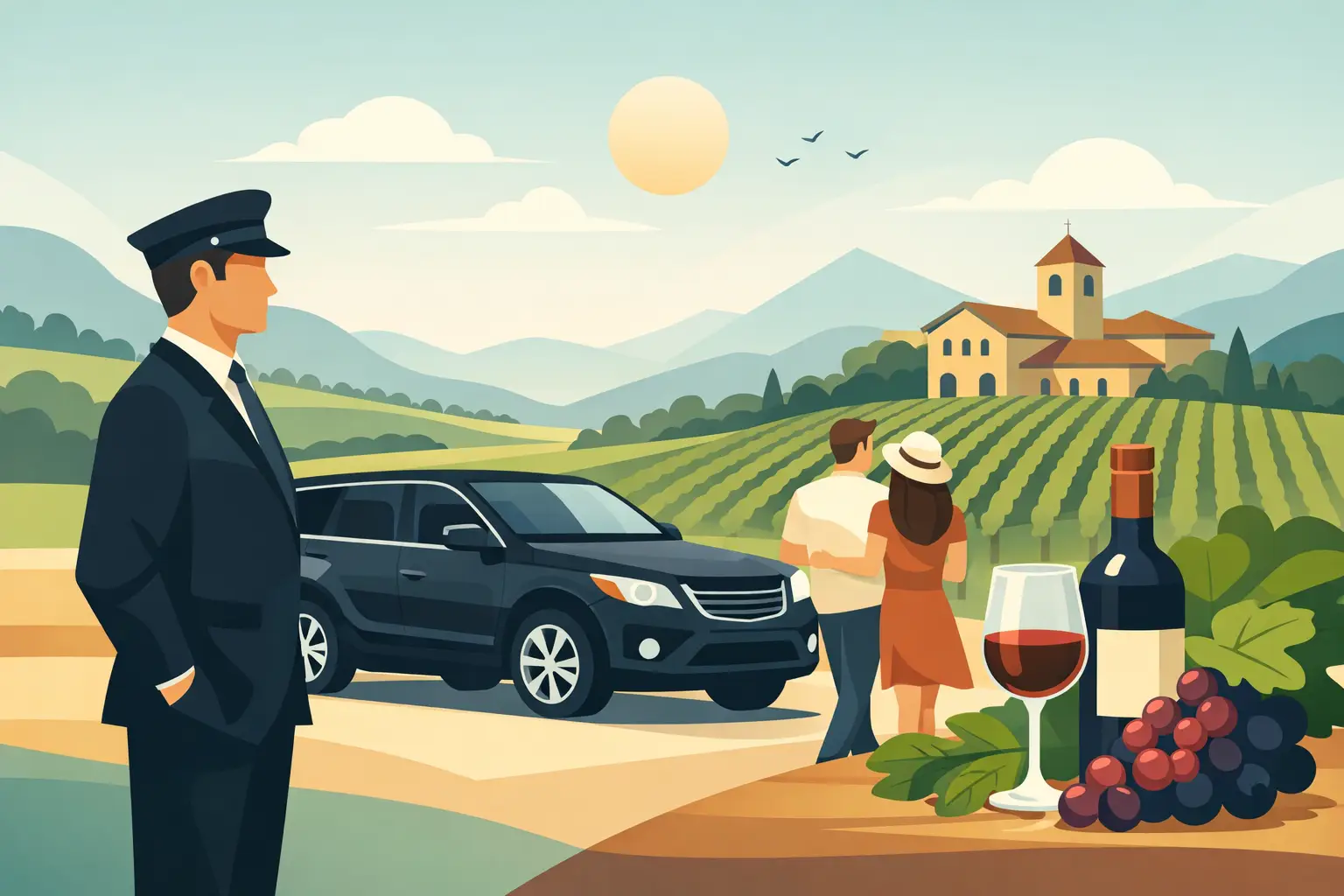
    Then there are personal occasions where comfort becomes part of the event itself: weddings, anniversary dinners, private winery visits, high-end tourism, or family travel where everyone wants space without sacrificing style. In those situations, the car is not just transportation. It shapes the tone of the day.

    The real value of a black car

    People sometimes assume black car service is mostly about luxury for luxury’s sake. The leather seats and elegant finish are part of it, of course, but they are not the whole story.

    The real value is predictability.

    You know who is picking you up, what type of vehicle is arriving, when it will be there, and what level of service to expect. That matters more than many travelers realize, especially when the trip itself carries stakes. Missing a flight, arriving flustered to a negotiation, or trying to manage luggage and timing after a long-haul journey can make a lower-cost option feel expensive in other ways.

    Privacy is another part of the appeal. In a black car, the atmosphere is typically quieter, more discreet, and less exposed. For business calls, private conversations, or simply a moment to reset between appointments, that environment has practical value.

    There is also the matter of professionalism. A skilled chauffeur does more than drive. They read the pace of the client, manage timing carefully, understand protocol, and know when to engage and when to remain unobtrusive. That balance is difficult to quantify, but easy to notice when it is done well.

    What kind of vehicles count as black cars?

    Traditionally, black car service was associated with luxury sedans, especially for executive and airport transportation. That remains true, but the category has evolved.

    Today, a black car fleet may include premium sedans for solo travelers and couples, luxury SUVs for added space, and high-end vans for families, corporate teams, or small groups. The best operators choose vehicles not only for appearance, but for ride quality, interior quiet, luggage capacity, and passenger comfort.

    That is why the term does not refer only to color. A white luxury sedan with chauffeur-level service may deliver the same standard, while a black vehicle with none of those service elements would not truly meet the expectation. In practice, people still use the term because it signals a certain class of travel.

    Is black car service worth it?

    It depends on the trip.

    If you need a short, casual ride across town and flexibility matters more than consistency, a taxi or rideshare may be perfectly reasonable. Not every journey calls for a premium solution.

    But if the ride is tied to a flight, a client meeting, a celebration, or a carefully planned day, black car service often justifies itself quickly. The premium is not only for the vehicle. It is for reduced uncertainty, better service, and a travel experience that protects your time and energy.

    For couples on a wine or culinary itinerary, the benefit may be the ability to enjoy the day without driving responsibilities. For corporate travelers, it may be the confidence that every pickup reflects company standards. For families, it may simply be the relief of having enough space, calm, and organization built into the day.

    In that sense, black car service is less about indulgence than about choosing the right level of travel for the moment.

    Who usually books a black car?

    The audience is broader than many people think. Yes, executives and VIP clients are frequent users. But so are international visitors, wedding parties, private travelers celebrating a milestone, and assistants organizing high-stakes itineraries for others.

    What these clients have in common is not status alone. It is preference. They prefer planning over improvisation, discretion over noise, and comfort over compromise. They want transportation that feels aligned with the rest of the experience.

    That is especially true in destinations where the journey itself is part of the day. In regions known for wine, gastronomy, or high-end tourism, a premium chauffeur service can tie everything together in a way that ordinary transport cannot. RiojaBlack, for example, is built around that expectation: executive-level vehicles, professional chauffeurs, and first-class mobility for travelers who want the ride to feel as polished as the destination.

    What to look for when booking a black car

    If you are considering black car service, focus on the details that reveal whether the service is truly premium or simply marketed that way.

    Vehicle quality matters, but consistency matters more. Ask what models are used, how pickups are managed, whether flight tracking is included, and how chauffeurs are selected and presented. Clear communication, transparent booking, and professional standards are often better indicators of quality than flashy language.

    It is also worth matching the vehicle to the trip. A sedan may be ideal for executive airport transfers, while a luxury van may be the better choice for a family, a couple on a full-day tour, or a small business group. Good service is not one-size-fits-all. It is tailored.

    A black car, at its best, is a simple idea executed exceptionally well: the right vehicle, the right chauffeur, and the right level of care at the exact moment it matters.
  • Black Car Service in La Rioja: What Sets It Apart

    Black Car Service in La Rioja: What Sets It Apart

    A late arrival into Bilbao. A board meeting in Logroño at 9 a.m. A winery lunch that turns into an afternoon tasting in the hills. These are the moments when black car service in La Rioja stops being a luxury add-on and becomes the smartest way to move.

    For travelers who care about timing, presentation, and comfort, the difference is immediate. This is not about getting from one point to another in the simplest possible way. It is about traveling in a quiet cabin, with a professional chauffeur, in a vehicle that reflects the standard of the day ahead – whether that means a corporate visit, a private wine itinerary, or a wedding schedule that leaves no room for improvisation.

    Why black car service in La Rioja is different

    La Rioja has its own rhythm. Distances are manageable, but the quality of the route matters. Airport pickups often involve connections from Bilbao, Madrid, Zaragoza, or Pamplona. Winery visits may require careful timing between appointments, lunch service, and cellar tours. Corporate travel can shift quickly from one meeting to another, with little tolerance for delays.

    A standard taxi can work for simple point-to-point needs. But premium ground transportation serves a different purpose. It is designed around anticipation. Flight monitoring, polished presentation, route planning, discreet communication, and onboard comfort are part of the service, not extras added at the last minute.

    That difference matters most to people who travel with expectations. Executives need reliability that supports their schedule and image. Couples booking a wine-country weekend want the day to feel relaxed, not improvised. Families and small groups often need more than seats – they need space, luggage capacity, and a driver who understands the region.

    When a premium chauffeur service makes sense

    Some bookings are clearly premium from the start. A wedding transfer, an executive roadshow, or a high-value client arrival calls for protocol, discretion, and a vehicle that makes the right impression. In those cases, the choice is straightforward.

    Other situations are less obvious, but the value becomes clear once logistics are involved. An airport transfer from Bilbao to Logroño may be over in a few hours, yet after a flight delay or a long international journey, having a chauffeur waiting with exact pickup coordination changes the tone of the trip. The same is true for wine tourism. If the day includes multiple wineries, lunch, and scenic stops, driving yourself means someone is always watching the clock, the route, and the wine list.

    There is also the matter of consistency. A black car service is especially useful when the standard must stay high across the entire journey, not just the first leg. That is why it appeals to executive assistants arranging transport for leadership teams, to international visitors who expect bilingual support, and to travelers who prefer one trusted mobility partner instead of piecing together separate rides.

    What to expect from a black car service in La Rioja

    At the premium end of the market, service begins before the vehicle arrives. Good providers confirm details clearly, understand pickup protocols, and build around the client’s schedule rather than forcing the schedule to fit the ride. That sounds simple, but it is where many transport experiences succeed or fail.

    The vehicle itself should feel first class. In practice, that means immaculate presentation, a refined interior, generous space, and the kind of ride quality that allows a passenger to work, rest, or simply enjoy the landscape. A premium Mercedes-Benz sedan delivers one kind of experience – ideal for executive transfers or couples who want privacy and elegance. A Mercedes-Benz van serves another need, offering the same standard of finish with more capacity for families, corporate groups, or winery outings.

    The chauffeur is just as important as the car. Professionalism is not limited to driving skill. It includes discretion, punctuality, personal presentation, and the ability to read the situation. Some clients want conversation and local recommendations. Others want silence and complete privacy. The best chauffeurs know the difference without needing to be told twice.

    For many international travelers, bilingual service is another mark of quality. It reduces friction, especially during airport pickups, hotel coordination, and itinerary adjustments. It also creates confidence when plans become more complex, which they often do in multi-stop leisure or business travel.

    Airport transfers, wineries, and corporate mobility

    The strongest black car services are not generic. They understand the real travel patterns of the region.

    Airport transfers are a prime example. La Rioja does not depend on a single gateway, so premium transportation often means connecting smoothly from major airports in northern and central Spain. Timing, traffic awareness, and communication matter more than the ride itself. A delayed arrival, a last-minute terminal update, or a meeting that runs over should not create stress for the passenger.

    Winery and gastronomy travel require a different style of service. Here, the driver is supporting an experience, not just a transfer. The route may need to balance elegance, flexibility, and local knowledge. There is a difference between being driven through wine country and being guided through it with taste and precision. The latter feels curated.

    Corporate mobility has its own standards. Punctuality is obvious, but protocol is what separates premium service from standard transportation. Executive pickups, client hosting, business invoicing, and polished vehicle presentation all matter. When a company sends a car for a board member, investor, or visiting partner, the vehicle becomes part of the company image.

    The trade-off: higher cost, higher standard

    A black car service costs more than a taxi. It should. The vehicle class is higher, the planning is tighter, and the service is built around reliability and comfort rather than simple availability.

    That said, premium is not always necessary. If someone needs a short ride across town with no timing pressure, a taxi may be perfectly reasonable. The value of a black car service appears when comfort, image, coordination, or discretion have real weight. That could mean a wedding day, an airport run after a red-eye, a full-day winery itinerary, or a corporate visit where the details are being noticed.

    For many clients, the real comparison is not taxi versus chauffeur. It is uncertainty versus control. When the schedule matters, when guests are involved, or when the day is supposed to feel elevated, control is often worth the difference in price.

    Choosing the right provider in La Rioja

    If you are evaluating premium transportation, the key question is not simply what car will arrive. It is what kind of experience will arrive with it.

    Look for a company that presents itself with clarity and restraint. Premium service does not need to oversell. Instead, it should show precision – clear communication, high-end fleet standards, professional chauffeurs, and familiarity with the demands of business travel, winery circuits, airport logistics, and special events.

    Fleet quality matters, but so does consistency. A luxury sedan for one transfer means little if the service falls apart when plans change. The stronger providers are the ones that remain composed under real-world conditions: delayed flights, revised itineraries, extra luggage, weather shifts, or guest requests made on the move.

    It also helps to choose a service with local intelligence. La Rioja rewards people who understand its pace. The roads, wineries, hospitality standards, and nearby city connections all shape the journey. A provider with deep regional knowledge can make the day feel effortless in a way that a generic operator cannot. That is one reason premium travelers often return to specialist companies such as RiojaBlack rather than booking transportation as an afterthought each time.

    Black car service in La Rioja for travel that feels first class

    The best private transportation does something subtle. It removes friction without drawing attention to itself. The airport arrival feels calm. The winery route feels unhurried. The corporate transfer feels polished. The wedding timeline holds.

    That is the real appeal of black car service in La Rioja. Not excess for its own sake, but a level of care that protects the quality of the entire day. When travel is part of the experience, not just the distance between moments, choosing the right car and chauffeur changes more than the ride.

  • How to Plan Winery Transport the Right Way

    How to Plan Winery Transport the Right Way

    A great winery day can fall apart before the first tasting. The usual problem is not the wine. It is timing that runs long, a driver who does not know the region, a vehicle that feels cramped after the second stop, or a group trying to coordinate around parking, maps, and changing plans. If you are deciding how to plan winery transport, the goal is simple: protect the experience from unnecessary friction.

    For premium travelers, transport is not a side detail. It shapes the pace of the day, the level of comfort between visits, and whether the itinerary feels curated or improvised. The right plan gives you privacy, punctuality, and the freedom to enjoy each winery without watching the clock or assigning someone to stay sober and drive.

    How to plan winery transport around the day you actually want

    The best itineraries do not start with a vehicle. They start with the type of day you want to have. A couple visiting two iconic estates and a long lunch needs a very different transport plan from a corporate group fitting in four appointments, or a family balancing wine tasting with sightseeing.

    Start by defining the rhythm. Do you want a slow, elegant day with time to linger, or a more structured itinerary with precise arrival windows? Most winery visits last longer than people expect, especially when the host is generous, the cellar tour runs over, or lunch becomes part of the occasion. Building in breathing room matters.

    A common mistake is trying to fit too much into one day. On paper, four wineries may look efficient. In practice, it can feel rushed, especially if the properties are spread out or include private tours. For most guests, two or three well-chosen visits create a more refined experience than racing through a longer list.

    Transport planning should also account for the style of roads in wine regions. Distances can appear short, but rural access roads, town traffic, and estate entrances all affect timing. What looks like a quick transfer can take longer than expected, particularly if the day includes a lunch reservation or a hard deadline at the end.

    Choose the right vehicle, not just any ride

    If you are planning winery transport for a premium experience, the vehicle should match the occasion. This is not only about appearance, although presentation matters. It is also about space, ride quality, climate control, luggage capacity, and how comfortable everyone feels between stops.

    For couples or executives, a luxury sedan usually offers the quietest and most private setting. For small groups, families, or guests carrying purchases, a premium van often makes more sense. The extra room changes the day. People can settle in, speak comfortably, and avoid the fatigue that comes from spending hours in a vehicle that is technically adequate but not truly comfortable.

    There is also the matter of image. If the day includes hosting clients, celebrating a milestone, or arriving at a well-known estate with reservations under your name, ordinary transportation can feel out of step with the standard of the rest of the itinerary. A polished chauffeur service creates continuity from the first pickup to the final drop-off.

    Timing is where winery transport plans succeed or fail

    Many travelers focus on where they are going and underestimate when they should leave. The most reliable winery transport plans are built backward from fixed reservation times. If your first tasting is at 11:00 a.m., your departure time should not simply reflect the drive. It should include a margin for traffic, hotel pickup logistics, and the possibility that the group is not standing outside the moment the car arrives.

    This becomes even more important when airports are involved. If you are landing and heading directly into wine country, delays, baggage claim, and flight coordination need to be part of the transport plan. The same is true on departure day. A relaxed winery lunch feels very different when your return transfer has been timed correctly and no one is calculating the risk of missing a flight.

    A professional chauffeur service should help shape realistic timing, not simply accept an overpacked schedule. That guidance is part of the value. Good transport is not just driving. It is itinerary protection.

    Build in room for the unexpected

    Wine travel is one of the few categories of luxury tourism where running slightly late can happen for pleasant reasons. A host opens an additional vintage. The view deserves ten more minutes. Lunch stretches naturally. Those moments are often the highlight of the day.

    That is why rigid scheduling can work against you. It is better to leave small buffers between stops than to create a plan where every delay compounds. If one winery runs 20 minutes over and the rest of the day collapses, the issue was not the host. It was the transport plan.

    Private chauffeur or self-drive?

    For a serious wine day, this is usually an easy decision. Self-driving may seem flexible, but it introduces compromises immediately. Someone has to stay responsible behind the wheel. Parking becomes part of every stop. Navigation distracts from the experience. And if the region is unfamiliar, wrong turns and timing errors are more likely than most visitors assume.

    A private chauffeur changes the tone of the day. You travel in quiet comfort, keep the group together, and move through the itinerary without administrative effort. There is no discussion about routes, no waiting for ride availability in rural areas, and no awkward transition between a premium tasting and a basic pickup experience.

    For international visitors, bilingual service also matters more than people expect. It simplifies coordination with hotels, wineries, and airport staff, and it removes the small misunderstandings that can chip away at an otherwise polished trip.

    How to plan winery transport for groups

    Group winery transport requires more than booking a larger vehicle. The real challenge is coordination. Who is the main point of contact? Are all guests starting from the same hotel? Is anyone joining late or leaving early? Will purchases need to be stored during the day? These details affect vehicle choice and scheduling.

    The larger the group, the more valuable structure becomes. That does not mean the day should feel rigid. It means the logistics should be settled in advance so the atmosphere remains relaxed. A well-managed group transfer feels effortless precisely because someone has already thought through the sequence.

    Corporate groups need an even tighter standard. Timing, presentation, and discretion are part of the host’s image. In that setting, transport is not a background service. It reflects the professionalism of the entire event. This is where protocol, polished presentation, and consistency matter most.

    Do not overlook the return journey

    Most people spend time planning how to get to the wineries and far less time planning how the day ends. That is a mistake. After tastings and lunch, comfort becomes more valuable, not less. Guests are tired, purchases may need room, and hotel or airport drop-offs should be organized cleanly.

    If dinner is part of the plan, the schedule should account for that from the start rather than treating it as an add-on. A premium day deserves a composed finish.

    Questions to settle before you book

    Before confirming winery transport, make sure you know the pickup address, the full list of stops, the estimated duration of each visit, and whether lunch is fixed or flexible. Confirm the number of passengers and how much space you need for wine purchases. If any guests are arriving by air or train, provide those details early.

    It is also worth asking whether the provider understands the specific wineries and routes involved. Local knowledge is not a luxury extra in wine country. It directly affects punctuality, route efficiency, and the quality of the day. A chauffeur who knows the rhythm of the region can anticipate issues before they become visible to the guest.

    In a destination such as La Rioja, where estates range from iconic architecture to tucked-away family properties, that familiarity makes a noticeable difference. It means less time solving logistics and more time enjoying what you came for.

    The standard should match the occasion

    If you are investing in winery reservations, private tastings, or a carefully planned weekend, transport should support that standard rather than dilute it. That is why premium travelers often prefer a dedicated chauffeur service over conventional taxi arrangements or pieced-together transfers. The difference is not only luxury. It is consistency, discretion, and a calmer way to move through the day.

    For guests who want that level of service, a company such as RiojaBlack fits naturally into the experience – especially when the itinerary includes top wineries, business hosting, or airport coordination around a wine-focused stay.

    The best winery transport plan is the one you barely have to think about once the day begins. You step in, settle back, and let the region unfold at the right pace.

  • How to Choose a Wine Tour Driver in Rioja

    How to Choose a Wine Tour Driver in Rioja

    A Rioja wine itinerary can fall apart in small, expensive ways. The wrong pickup point, a rushed lunch, a driver who knows roads but not wineries, a vehicle that feels ordinary when the day is meant to feel exceptional. Choosing the right wine tour driver Rioja travelers rely on is less about getting from one bodega to another and more about how the entire day is carried.

    For guests who value privacy, timing, and first-class comfort, a wine tour driver is not a simple transfer provider. This service sits somewhere between private hospitality, local expertise, and executive mobility. That distinction matters, especially in a region where great wineries are easy to find, but truly polished transport is not.

    What a Rioja wine tour driver service should really provide

    At the premium end of the market, the standard is not merely a clean car and punctual arrival. It is a chauffeur-led experience built around discretion, fluid logistics, and calm coordination from the first pickup to the final drop-off.

    That starts with presentation. A professional chauffeur should arrive in a vehicle that matches the level of the day ahead, whether the plan involves iconic architecture in Elciego, boutique family estates near Laguardia, or a long lunch between tastings. For many travelers, especially couples, small private groups, and corporate guests, the atmosphere inside the vehicle sets the tone. Silence, space, temperature control, immaculate condition, and polished service are not extras. They are part of the product.

    It also extends to regional knowledge. Rioja is not difficult to visit, but it can be surprisingly inefficient to navigate well. Appointments run on winery time, not always on tourist time. Some cellars are close together on paper, yet inconvenient to sequence. Others deserve more time than expected. A driver familiar with the rhythm of the region helps the day move naturally rather than mechanically.

    Chauffeur service vs taxi for Rioja wine touring

    This is where many travelers make the wrong comparison. A taxi can complete a route. A chauffeur service manages an experience.

    The difference becomes obvious the moment the day involves more than one stop. A taxi arrangement often feels transactional and reactive. You go from point A to point B, then negotiate the next segment. That can work for simple journeys, but wine tourism rarely stays simple. Tastings overrun. Lunch shifts. One estate invites you to stay on a terrace for an extra glass. Another finishes early. A premium chauffeur service is designed to absorb those changes without making the client feel the strain behind them.

    There is also an image consideration. For executive travel, hosted guests, anniversary trips, and special celebrations, arriving in a standard vehicle with a standard level of service does not convey the same message as a luxury chauffeur experience. For some clients, that is about status. For others, it is about consistency. If the wineries, hotel, and dining are all carefully chosen, transport should not be the weak point.

    What to look for in a premium wine tour driver Rioja visitors can trust

    The first sign is clarity. A serious provider should be able to explain exactly what is included, how timing is handled, what vehicle class is assigned, and whether the driver speaks English comfortably if international guests are involved. Ambiguity is rarely a luxury feature.

    The second is fleet quality. For a Rioja wine day, the vehicle should feel suited to elegant leisure travel, not borrowed from generic urban transfer work. High-end sedans offer privacy and composure for couples or executives, while premium vans are ideal for families or small groups who want generous space without compromising style. If the trip begins or ends with an airport transfer from Bilbao, Madrid, Zaragoza, or Pamplona, luggage capacity matters just as much as comfort.

    The third is local judgment. Not every client wants the same Rioja. Some prioritize internationally known names and architectural landmarks. Others prefer smaller wineries, quieter roads, and a more intimate pace. A strong chauffeur service understands these different expectations and supports the itinerary accordingly, even when the wineries are booked by a concierge, hotel, or private planner.

    And finally, there is discretion. The best chauffeurs are attentive without being intrusive. They know when conversation is welcome and when silence is the greater luxury. That balance is especially valued by senior executives, couples, and international travelers who expect a service style closer to a five-star hotel than a public transport exchange.

    The hidden logistics behind a smooth Rioja wine day

    On paper, a wine route in Rioja can look charmingly straightforward. In practice, the quality of the day depends on pacing.

    A good chauffeur helps prevent classic itinerary mistakes: stacking too many tastings, underestimating travel time between villages, scheduling lunch too late, or creating a route that leaves guests tired rather than delighted. This is one reason private transport is so often preferred over self-driving. The issue is not only wine consumption. It is also the mental load of navigation, parking, timing, and regional road familiarity.

    For premium travelers, that burden should disappear entirely. The day should feel composed. There should be no need to check maps, chase reservations, or think about who is driving after a long lunch. A well-run service creates that sense of ease without making a show of it.

    This is also why flexibility matters more than many visitors expect. Rioja rewards spontaneity when it is managed correctly. Perhaps the weather calls for an extra stop in a hilltop village. Perhaps one estate proves less compelling than anticipated and another deserves a longer visit. A chauffeur-led service allows these decisions to happen gracefully.

    When a private driver makes the biggest difference

    Not every traveler needs the same level of transport. If the plan is a single winery lunch near the hotel, simpler arrangements may be enough. But there are several situations where a premium wine tour driver offers clear value.

    One is the multi-stop day. As soon as the itinerary includes two or three wineries, lunch, and possibly a hotel or airport connection, the service becomes much more than a ride. It turns into itinerary support.

    Another is travel with guests. If clients, colleagues, family members, or close friends are involved, the host often wants the day to feel effortless for everyone else. That is difficult to achieve if transport feels improvised.

    A third is special occasion travel. Anniversaries, proposals, birthdays, and wedding-weekend wine days benefit from a level of polish that standard transport rarely delivers. The vehicle, the arrival, the smooth transitions between venues – these details quietly elevate the memory.

    For international visitors, language can also shape the experience. A bilingual chauffeur reduces friction, especially when coordinating winery entrances, rural pickups, restaurant timing, and airport schedules. What feels minor in theory can make a meaningful difference over the course of a long day.

    Why vehicle choice matters more than people think

    In luxury ground transport, the vehicle is not just a practical tool. It is part of the hospitality.

    A refined sedan suits travelers who want intimacy, calm, and a more executive style of movement. It works particularly well for couples and one-on-one hosting. A premium Mercedes van, by contrast, is often the better answer for small groups who want to stay together without sacrificing comfort or elegance. The extra room changes the atmosphere of the day, especially after several tastings.

    Electric premium vehicles can also appeal to travelers who care about quieter, more contemporary mobility. That choice can feel especially aligned with modern luxury – understated, comfortable, and deliberate.

    The right answer depends on the occasion. Bigger is not always better, and neither is the most formal option. The best providers guide that decision based on group size, luggage, route length, and the style of experience the client wants.

    A premium standard, not an add-on

    The most successful Rioja wine days tend to share one thing: nothing feels rushed, awkward, or improvised. That rarely happens by accident. It comes from choosing partners who understand service, not just transportation.

    For travelers seeking a true first-class experience, a wine tour driver should deliver comfort, precision, and local confidence in equal measure. That is the level of service premium guests expect in La Rioja, and it is precisely the standard RiojaBlack was built to provide.

    When the wines are memorable and the schedule is well judged, transport becomes almost invisible. And that is usually the clearest sign you chose well.

  • Luxury Airport Transfer Rioja Done Right

    Luxury Airport Transfer Rioja Done Right

    A delayed landing, two checked bags, a tight winery reservation, and a driver who is nowhere to be found – that is usually the moment travelers realize how much a luxury airport transfer Rioja service matters. When your itinerary includes business meetings, private tastings, or a carefully planned stay in wine country, the ride from the airport is not a minor detail. It sets the tone for everything that follows.

    For premium travelers, airport transportation is less about getting from point A to point B and more about control, comfort, and consistency. A standard taxi may be available, but availability is not the same as assurance. The difference becomes obvious the moment you step into a quiet, immaculately presented vehicle, are greeted by a professional bilingual chauffeur, and leave the terminal without friction or guesswork.

    What defines a luxury airport transfer Rioja service

    A true premium transfer is built around precision. That starts before the vehicle arrives. Flight tracking, coordinated pickup timing, clear chauffeur identification, and route planning all matter. If your flight lands early, the service adjusts. If immigration takes longer than expected, your pickup is still managed with calm professionalism.

    The vehicle also matters, but luxury is not only leather seats and a premium badge. It is cabin silence, smooth driving, climate control set correctly, space for luggage, privacy for calls, and the feeling that nothing has been improvised. For some travelers, that means a Mercedes-Benz S-Class for executive comfort. For others, especially families or small groups, it means the practicality and elegance of a Mercedes-Benz V-Class.

    The chauffeur is often the deciding factor. Discretion, polished presentation, local knowledge, and the ability to read the moment are what distinguish first-class service from simple transport. Some clients want a quiet journey after a long flight. Others need efficient coordination with a hotel, a winery, or a corporate host. The best chauffeurs understand both without being told twice.

    Why premium travelers choose luxury airport transfer Rioja

    In La Rioja, arrival logistics are rarely as simple as stepping outside and finding the right car. Many visitors arrive through Bilbao, Madrid, Zaragoza, or Pamplona, then continue on to Logroño, Haro, Laguardia, or a countryside estate. That makes reliability far more important than it would be in a city with one central airport and short urban transfers.

    For couples planning a wine weekend, the appeal is obvious. After a flight, the last thing most people want is to queue for transport, explain rural destinations, or hope the driver knows the route to a boutique hotel or private winery. A luxury transfer keeps the experience consistent from the first mile.

    For corporate clients, the standard is even higher. Airport pickups are part of brand image. When an executive, investor, or guest speaker lands, the vehicle, timing, and driver conduct all reflect on the company arranging the service. This is where protocol-driven transport matters. Punctuality is expected. Discretion is non-negotiable. Presentation is part of the service.

    Families and small groups tend to value something slightly different – space, calm, and simplicity. A premium vehicle with generous room for passengers and luggage removes the stress that often comes with coordinating multiple taxis or squeezing into an unsuitable car. It is a more comfortable choice, but also a more practical one.

    Airports, routes, and the reality of Rioja travel

    One reason luxury airport transfer Rioja services are so relevant is geography. Visitors heading into the region frequently use airports outside La Rioja itself, and that creates longer road journeys where comfort becomes meaningful rather than cosmetic.

    A transfer from Bilbao can be ideal for travelers coming from major international routes. Madrid works well for long-haul arrivals and corporate schedules. Zaragoza and Pamplona can be efficient depending on the origin city and final destination. The right option depends on your itinerary, how much time you have, whether you are traveling for business or leisure, and how much you value directness over price.

    This is where local expertise makes a difference. Not every driver understands the rhythm of wine country travel, hotel access points, event venues, or rural estate locations. In a premium service, that knowledge is expected. It saves time, avoids awkward delays, and makes the journey feel composed from the start.

    The difference between private chauffeur service and a taxi

    Some travelers compare options and ask whether a luxury transfer is simply a more expensive taxi. It is not. The models are different.

    A taxi is a transactional ride. A chauffeur service is a planned experience. The booking is arranged in advance, the route is prepared, the pickup is monitored, and the service standard is controlled from beginning to end. The vehicle category is known ahead of time. The chauffeur arrives with the right brief. The client does not have to improvise.

    That difference is especially noticeable after a long flight, during peak travel periods, or when the destination is not a common city-center drop-off. It is also noticeable when image matters. If you are hosting a client, attending a wedding, or arriving for a high-end leisure stay, a conventional taxi rarely delivers the same level of comfort or presentation.

    There is, of course, a trade-off. A premium transfer costs more. For short, simple journeys with flexible timing, some travelers may not need the extra service level. But for airport pickups tied to reservations, meetings, premium accommodations, or special occasions, the value tends to be very clear.

    Choosing the right luxury airport transfer Rioja option

    The best choice depends on who is traveling and what the day requires. A solo executive may prioritize privacy, onboard quiet, and the ability to work during the drive. A couple arriving for a multi-day wine itinerary may care more about comfort, local insight, and a refined start to the trip. A family may focus on luggage capacity and stress-free coordination.

    Vehicle selection should follow the travel plan, not the other way around. An S-Class delivers a more intimate executive atmosphere. A V-Class is often the smarter choice for groups, extra luggage, or clients who want more room without compromising style. Electric premium models can also appeal to travelers who want a more contemporary and responsible mobility choice, provided charging and route planning are managed properly.

    Service details are worth checking before booking. Meet-and-greet, waiting time, bilingual support, invoicing for business travel, child seat availability, and the ability to combine airport arrival with onward stops all make a difference. If your schedule includes a hotel check-in, lunch reservation, or direct transfer to a winery, those details should be coordinated in advance rather than negotiated on arrival.

    When airport transfer becomes part of the experience

    In premium travel, transportation is not separate from hospitality. It is part of it. The ride from the airport can become a quiet transition into a weekend of exceptional dining and wine, or a productive calm before a full day of meetings.

    That is why high-end travelers often choose a service that can do more than one transfer. If the same provider can also handle winery visits, corporate movements, event transport, or return airport service, the entire stay feels more coherent. There is one standard, one point of contact, and one level of trust.

    For visitors who want that level of care, RiojaBlack reflects what first-class ground transportation should look like in the region – polished, discreet, and managed with the kind of precision premium clients expect.

    Luxury airport transfer Rioja for business and leisure

    Business and leisure clients often want different things, but both value certainty. The business traveler wants exact timing, professional discretion, and billing that fits corporate processes. The leisure traveler wants comfort, local ease, and a service that feels elevated from the first interaction.

    The strongest chauffeur services understand both worlds. They know when to keep the journey quiet and when to provide helpful guidance. They know that a delayed evening arrival requires the same attention to detail as a midday executive pickup. They know that luxury is not theater. It is consistency.

    If you are planning travel into La Rioja, the airport transfer deserves more thought than most people give it. A well-chosen chauffeur service protects the schedule, supports the experience, and removes the friction that tends to appear at exactly the wrong moment. When the trip matters, arriving well is part of traveling well.

  • Why Choose a Private Chauffeur Service Logrono

    Why Choose a Private Chauffeur Service Logrono

    A flight lands late in Bilbao, the meeting in Logroño starts early, and the margin for error is zero. That is exactly when a private chauffeur service Logrono makes the difference between simply getting there and arriving with complete control over time, comfort, and presentation.

    For travelers who are used to a higher standard, transportation is never just transportation. It affects the tone of a business trip, the pace of a wine country itinerary, and the experience of a wedding day or special event. A premium chauffeur service is not meant to compete with a standard taxi on price. It is designed for clients who value discretion, punctuality, polished service, and a vehicle that feels like an extension of a first-class hotel experience.

    What sets a private chauffeur service Logrono apart

    The distinction starts well before the journey begins. With a chauffeur-led service, booking is structured, expectations are clear, and the vehicle category is part of the experience rather than an afterthought. You know who is meeting you, what type of car will arrive, and how the route will be handled.

    That matters in Logroño and across La Rioja because many trips are not simple point-to-point rides. They often involve airport coordination, multi-stop winery visits, restaurant schedules, corporate appointments, or guests who expect a certain level of protocol. In those cases, reliability is not a luxury detail. It is the service itself.

    There is also a clear difference in atmosphere. A premium chauffeur vehicle is quiet, impeccably presented, and intended to let you work, rest, or simply enjoy the journey without friction. For executives, that may mean answering calls in privacy. For couples on a wine itinerary, it means moving between estates in comfort rather than watching the clock and managing logistics. For families or small groups, it often means having the space and calm that conventional transport rarely delivers.

    When a chauffeur service is the smart choice

    Some clients assume chauffeur service is only for major events or VIP travelers. In practice, it is often the most sensible option whenever timing, image, or comfort matter more than finding the cheapest available ride.

    Airport transfers are the most obvious example. Connections to Bilbao, Madrid, Zaragoza, or Pamplona can involve early departures, delayed arrivals, or guests coming from overseas. A well-run chauffeur service tracks timing, plans pickup windows carefully, and removes the uncertainty that tends to surround high-stakes travel days.

    Corporate mobility is another common use case. If you are receiving international clients, transporting senior leadership, or moving between meetings in different cities, the vehicle becomes part of your professional standard. Presentation counts. So does discretion. A chauffeur who understands protocol, remains measured in communication, and handles changes with composure is very different from a driver simply completing a fare.

    Then there is leisure travel, where the value is less about urgency and more about quality. La Rioja is best enjoyed without rushing, parking concerns, or route planning interrupting the day. A private chauffeur allows the itinerary to feel curated. Lunch can run longer. A tasting can become an extra stop. The day retains its elegance because someone else is responsible for timing, roads, and coordination.

    More than transport for winery and gastronomic travel

    Wine tourism tends to expose the limits of ordinary transport quickly. Distances between estates are manageable, but the real challenge is flow. Reservations are timed, tastings can shift, roads are often unfamiliar to international visitors, and the overall experience should feel relaxed rather than managed minute by minute.

    A chauffeur service works best here because it adds local judgment. The route between wineries is one part of the job. Understanding pacing, access points, and how to keep the day comfortable is another. The strongest providers are not simply driving guests from one address to another. They are supporting the rhythm of a premium day out.

    This is particularly valuable for couples and small private groups who want a refined experience without moving in a large organized tour. The vehicle remains private, the schedule remains yours, and the atmosphere stays personal. If the goal is to enjoy La Rioja at a high level, that privacy matters.

    The vehicle matters more than many clients expect

    People often focus first on the driver, but the vehicle itself shapes the journey in a very practical way. An executive sedan works well when privacy, quiet, and formal presentation are the priority. A premium van may be the better choice for families, corporate groups, or travelers with luggage and shopping. An electric luxury model can also be the right fit for clients who want comfort with a more contemporary profile.

    What matters is not just brand prestige, although that plays a role. It is the combination of ride quality, cabin silence, space, climate control, cleanliness, and how the car presents on arrival. A high-end Mercedes-Benz fleet signals consistency, and consistency is exactly what premium clients are paying for.

    There is a trade-off, of course. If your only concern is the lowest short-distance fare within the city, a chauffeur service may be more than you need. But that is rarely the comparison affluent travelers or corporate bookers are making. They are comparing confidence, comfort, and standards. In that comparison, the vehicle is not cosmetic. It is central.

    The role of the chauffeur, not just the driver

    The best chauffeur services are built around people as much as cars. A professional chauffeur is expected to be punctual, discreet, well presented, and calm under pressure. For international travelers, bilingual service is often another significant advantage, especially when airport arrivals, hotel communication, or schedule adjustments are involved.

    There is also an element of anticipation that separates premium service from basic transport. A strong chauffeur understands when conversation is welcome and when silence is preferable. They assist without becoming intrusive. They maintain protocol for corporate passengers and create ease for leisure guests. It is hospitality as much as mobility.

    This is where many premium clients notice the biggest difference. Luxury is not loud. It is measured. The car arrives spotless. The pickup feels orderly. Timing is respected. Luggage is handled properly. The route is smooth. You never feel like you are negotiating for service during the service.

    Choosing the right provider in Logroño

    If you are comparing options, look beyond the phrase luxury transport and ask a few sharper questions. Is the fleet truly premium and professionally maintained? Does the company handle airport transfers and regional long-distance routes regularly? Are chauffeurs experienced with business travel, winery circuits, events, and multilingual guests? Can they accommodate different passenger profiles, from solo executives to families or wedding parties?

    It also helps to look for a provider with deep local knowledge. In a region shaped by wine tourism, business travel, and intercity connections, local expertise saves time and improves the overall experience. A company such as RiojaBlack positions itself around that exact combination of high-end vehicles, professional chauffeurs, and first-class regional service.

    The right choice will depend on the purpose of the trip. A board-level airport transfer requires different strengths than a wedding itinerary or a full-day private wine tour. The strongest operators can handle all three without losing consistency in tone or execution.

    Why premium travelers keep booking chauffeur service

    Once clients experience a well-executed chauffeur journey, they tend to stop seeing it as an indulgence and start seeing it as a practical standard. That is especially true for people who travel often, entertain clients, or want their leisure time to feel protected rather than consumed by logistics.

    The value is not just in arriving. It is in arriving composed. It is in knowing the vehicle will match the occasion, the chauffeur will match the expectations, and the service will hold its standard from pickup to drop-off. That level of certainty is difficult to replicate with ordinary transport.

    In Logroño, where journeys often connect business, hospitality, gastronomy, and regional travel, that certainty carries real weight. The right car, the right chauffeur, and the right service structure turn travel time into part of the experience instead of a gap between plans. If the day matters, the way you move through it should reflect that.

  • Descubrir La Rioja con Seguridad y Exclusividad: La Importancia de Elegir un Transporte Legal

    Cuando planificas una visita a La Rioja, ya sea por negocios o para sumergirte en la cultura del vino, buscas que cada detalle sea perfecto. La tranquilidad, el confort y la exclusividad son elementos innegociables para disfrutar de nuestros paisajes y bodegas. Sin embargo, hay un aspecto fundamental que a menudo pasa desapercibido a la hora de contratar traslados o rutas guiadas: la legalidad del transporte.

    ​En RiojaBlack, como empresa de vehículos de transporte con conductor (VTC) de lujo, creemos que la excelencia no solo se demuestra en la calidad de nuestros vehículos o en el trato exquisito de nuestros chóferes, sino en el estricto cumplimiento de la ley para garantizar tu absoluta protección.

    ​A continuación, te explicamos por qué es vital asegurarte de que contratas a un profesional autorizado y cómo evitar caer en las trampas del transporte ilegal.

    El falso «guía-chófer»: Una práctica de riesgo

    En los últimos años, ha proliferado en nuestra región una práctica preocupante. Muchos supuestos «guías turísticos» o empresas de ocio ofrecen paquetes de visitas a bodegas que incluyen el desplazamiento en sus vehículos particulares o furgonetas privadas.

    ​Lo que muchos visitantes desconocen es que, si no disponen de una autorización de transporte (Taxi o VTC), están operando en la absoluta ilegalidad. Ejercer de guía turístico no otorga, bajo ningún concepto, el derecho a transportar pasajeros con fines comerciales.

    Los graves riesgos de viajar en un vehículo no autorizado

    Contratar un servicio ilegal no solo fomenta la competencia desleal, sino que te expone a ti y a tus acompañantes a riesgos muy serios:​

    • Ausencia total de cobertura de seguro: Los vehículos particulares tienen pólizas de seguro estándar. En caso de accidente, si la aseguradora descubre que el conductor estaba realizando una actividad económica encubierta e ilegal, el seguro se inhibirá por completo. Los pasajeros quedarían desamparados, sin cobertura médica ni indemnización por daños.
    • ​Inmovilización policial y viajes arruinados: Las Fuerzas y Cuerpos de Seguridad del Estado (como la Guardia Civil o la Policía Local) realizan controles exhaustivos en carreteras y accesos a bodegas para detectar este tipo de intrusismo. Si detienen a un conductor ilegal, el vehículo es inmovilizado en el acto. Esto significa que te quedarás tirado en mitad de la ruta, perdiendo tus reservas y arruinando tu experiencia, además de verse envuelto en un desagradable proceso policial.​
    • Falta de garantías profesionales: Un conductor sin licencia no ha pasado los controles médicos, penales y de idoneidad exigidos por la administración para el transporte de pasajeros.

    ​¿Cómo comprobar que viajas en un transporte legal?

    Identificar a un profesional autorizado (Taxi o VTC) es más sencillo de lo que parece. Como cliente, tienes todo el derecho a exigir y comprobar estos elementos:​

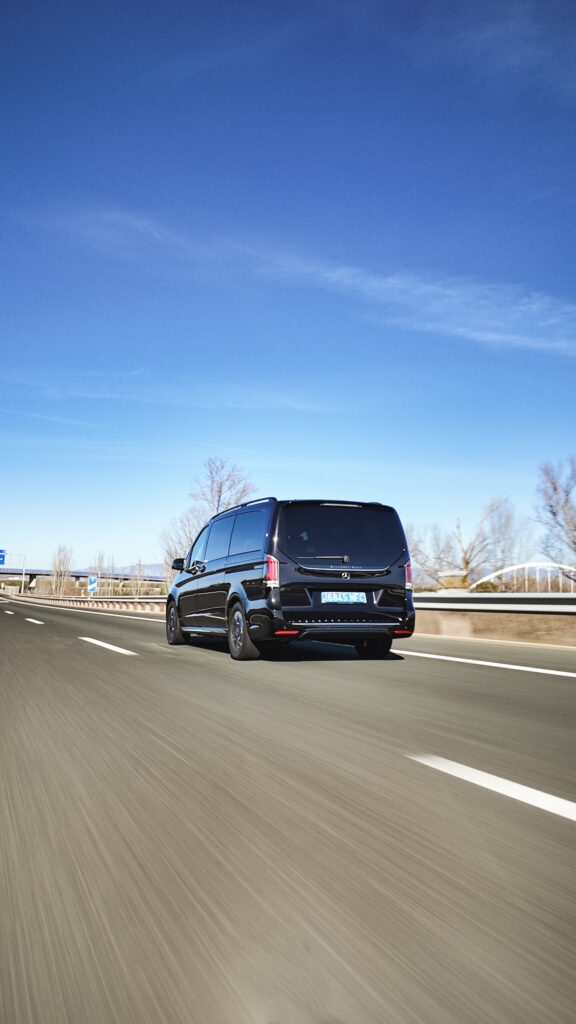
    • La placa de matrícula trasera azul: Por normativa, en España, todos los vehículos dedicados al transporte público de viajeros hasta 9 plazas (tanto Taxis como VTC) deben llevar obligatoriamente la matrícula trasera de color azul con los números y letras en blanco. Si el coche tiene la placa trasera blanca, es un vehículo particular operando ilegalmente.​
    Furgoneta Mercedes Clase V negra de RiojaBlack circulando por carretera para el servicio de chófer a disposición en La Rioja.
    Libertad para explorar La Rioja a tu ritmo. RiojaBlack, VTC en La Rioja.
    • Consulta en el Registro Oficial: Las autorizaciones son públicas. Puedes verificar si la empresa o el vehículo están inscritos en el Registro General de Transportistas (REAT) a través de la página web oficial del Ministerio de Transportes.
    • Distintivos VTC: Los vehículos de alquiler con conductor deben llevar pegatinas identificativas (distintivos autonómicos) visibles en la parte delantera y trasera del coche, certificando su autorización.

    La promesa de RiojaBlack: Tu tranquilidad es nuestro mayor lujo

    En RiojaBlack, el lujo va mucho más allá de viajar en un vehículo premium. El verdadero lujo es poder relajarte por completo, sabiendo que estás en manos de profesionales acreditados, con todas las autorizaciones en regla y con seguros de responsabilidad civil específicos que protegen hasta el último detalle de tu viaje.​

    No dejes tu seguridad ni tu tiempo al azar. Cuando visites La Rioja, exige la matrícula azul, exige profesionalidad y exige viajar con la tranquilidad que solo un servicio VTC legal te puede ofrecer.

    ​¿Listo para descubrir La Rioja con la elegancia y seguridad que mereces? Contáctanos en RiojaBlack y diseñaremos tu ruta perfecta.

  • Private Taxi Service in Logroño, Upgraded

    Private Taxi Service in Logroño, Upgraded

    A late flight into northern Spain, a board meeting the next morning, and a transfer that cannot go wrong – this is where a private taxi service in Logroño stops being a convenience and starts becoming part of the plan. For travelers who value timing, discretion, and comfort, the real question is not how to get from point A to point B. It is how well the journey is handled.

    In Logroño, transport options vary widely. A standard cab may be enough for a short city ride. But airport connections, winery itineraries, executive schedules, weddings, and full-day private travel call for a different standard. The difference is not only the vehicle. It is the way the service is designed around the passenger.

    What a private taxi service in Logroño should actually deliver

    The phrase can mean many things. Some travelers use it to describe any pre-booked ride. In premium travel, though, it should mean a professionally managed chauffeur service with clear standards, high-end vehicles, and a level of hospitality that feels closer to first-class travel than ordinary local transport.

    That matters in Logroño because the city often works as a gateway rather than a final stop. Visitors arrive for business in La Rioja, continue on to wineries in the surrounding countryside, or connect with airports in Bilbao, Madrid, Zaragoza, or Pamplona. These are not casual journeys where flexibility and presentation are optional. They require planning, local knowledge, and the ability to adapt without drama.

    A true premium service should begin before pickup. Booking needs to be straightforward, communication should be clear, and the service should be confirmed with the kind of precision busy travelers expect. If a flight is delayed, the response should be calm and already accounted for. If the day includes multiple stops, the driver should understand the route, the timing, and the tone of the occasion.

    Not all transport options are built for the same traveler

    There is nothing wrong with a conventional taxi when the need is simple. If you are leaving a restaurant and heading back to a hotel a few minutes away, speed and availability may be enough. But that logic breaks down when the trip affects your schedule, image, or overall experience.

    Business travelers usually care less about finding the cheapest ride than about arriving on time, stepping out of a vehicle that reflects their standards, and using travel time productively. Couples booking a winery day rarely want to think about driving, parking, road directions, or whether the return journey will be easy to arrange. Families and small groups often need space, reliability, and an environment that feels calm rather than improvised.

    This is where premium chauffeur travel separates itself. It offers consistency. The vehicle is reserved, the driver is assigned, the service is structured, and the client is not left negotiating the details in real time.

    When a private chauffeur makes the biggest difference

    Airport transfers are the most obvious case. A pickup from Bilbao or Madrid can involve long distances, shifting arrival times, and the need for an orderly welcome after a tiring journey. For international visitors especially, a bilingual driver and a polished meet-and-greet remove friction at exactly the moment when friction feels most exhausting.

    Wine tourism is another category where the gap becomes obvious. A day through Rioja wine country should feel elegant and unhurried. The value of private transport is not just safety, though that matters. It is the ability to enjoy tastings, move on schedule between appointments, and travel in quiet comfort through one of Spain’s most prestigious regions.

    Corporate mobility has its own priorities. Protocol, discretion, and punctuality are not extras in executive travel. They are the service. When moving a senior client, a visiting team, or a speaker for an event, transport becomes an extension of the company’s image. Details such as vehicle class, professional presentation, and invoice-ready administration carry real weight.

    Special occasions, especially weddings, also benefit from a more considered approach. Timing needs to be exact. Vehicles should look impeccable. The atmosphere should feel composed, not rushed. On a day built around memorable details, transportation should support the experience instead of introducing uncertainty.

    The vehicle changes the experience

    Premium ground transportation is often judged first by the car, and fairly so. The vehicle shapes comfort, privacy, and the overall impression of the service. Still, luxury is not about excess for its own sake. It is about appropriateness.

    For an executive transfer, a Mercedes-Benz S-Class gives the sense of quiet authority many clients want. For families, corporate groups, or couples traveling with luggage, a spacious premium van such as a Mercedes-Benz V-Class may be the smarter choice. Electric models also appeal to travelers who want refinement with a lower-emission profile, especially when sustainability is part of a company policy or a personal preference.

    The best service providers do not push one vehicle for every journey. They match the car to the itinerary. That sounds obvious, but it is often what separates a well-run premium operator from a generic transport company.

    The chauffeur matters more than the car

    A luxury vehicle without a professional chauffeur is only part of the equation. What discerning travelers remember is the handling of the service. Was the driver punctual without being intrusive? Did the conversation match the client’s mood? Was local knowledge helpful rather than performative? Did the entire ride feel calm, polished, and under control?

    This is especially important in a destination like La Rioja, where transport often overlaps with hospitality. A chauffeur may be the first person a traveler meets on arrival and the last person they see before departure. That interaction sets a tone.

    Professionalism also shows up in smaller details. Clean presentation, smooth driving, familiarity with hotels and wineries, discretion with high-profile clients, and the ability to communicate clearly in English all matter. They may not appear on a rate sheet, but they shape whether the experience feels ordinary or first class.

    How to choose the right private taxi service in Logroño

    If you are comparing providers, it helps to look beyond price. A lower fare can be attractive, but if the trip involves an airport, a business appointment, or a celebratory day in wine country, the cheapest option is rarely the best metric.

    Start with service model. Is this a true pre-booked private chauffeur operation or simply a ride provider using premium language? Then look at the fleet. Vehicle category says a lot about positioning, but so does whether the company specializes in executive and bespoke travel rather than trying to serve every market at once.

    Communication is another strong signal. Premium service should feel responsive, precise, and easy to coordinate. If you are arranging transport for a client, an executive, or a family celebration, vague replies are usually a warning. Good operators understand itineraries, adapt to changes, and confirm details with confidence.

    Finally, consider local expertise. The roads between city hotels, remote wineries, event venues, and regional airports are not all equal in timing or logistics. A chauffeur with deep regional knowledge adds value that goes well beyond driving.

    For travelers seeking that standard, RiojaBlack represents the premium end of the category – a service built around Mercedes-Benz vehicles, bilingual chauffeurs, and a hospitality-led approach designed for clients who expect more than a conventional taxi ride.

    Why premium transport is often the better value

    Luxury transport is not the right choice for every trip. If your needs are basic and flexible, a standard taxi may be perfectly reasonable. But for the trips that matter, value is measured differently.

    It includes the cost of missed time, the risk of poor coordination, the fatigue of unmanaged travel, and the impression created when the vehicle arrives. It also includes peace of mind, which is hard to quantify until the day becomes complicated and the service still runs smoothly.

    That is why affluent leisure travelers, executive assistants, and corporate bookers often return to the same premium provider. They are not only buying a ride. They are buying reliability with polish.

    In a place like Logroño, where business travel, wine tourism, and special occasions often intersect, transport should do more than move you. It should protect your schedule, elevate the experience, and leave the quiet sense that every detail was already handled.

  • Why a Private Driver for Wine Tours Matters

    Why a Private Driver for Wine Tours Matters

    A great wine itinerary can fall apart for reasons that have nothing to do with wine. The wrong pickup time, a rushed lunch, a designated driver who cannot relax, a car that feels ordinary after a private cellar tasting – these details change the day. That is why a private driver for wine tours is not an extra for travelers who value comfort and precision. It is often the difference between simply visiting wineries and experiencing the region properly.

    Wine travel tends to look effortless from the outside. A few tastings, a scenic route, maybe a long lunch, then back to the hotel. In practice, the day depends on timing, local road knowledge, reservation coordination, and the ability to move from one estate to the next without friction. For couples, families, and executive travelers, the transport choice shapes the entire tone of the experience.

    What a private driver for wine tours actually changes

    The obvious benefit is that nobody has to drive after tastings. That matters, but it is only the starting point. A private chauffeur changes the rhythm of the day. You are picked up on schedule, travel in a quiet and well-presented vehicle, and move through the region without checking maps, parking, or debating routes.

    For premium travelers, that reduction in noise is part of the value. A winery visit is rarely just transportation between points A and B. It is a hospitality experience. If the transfer feels improvised, the day loses consistency. If the service feels polished from the moment you leave your hotel, the entire itinerary feels more coherent.

    There is also the matter of flexibility. Wine days do not always run exactly to plan. A tasting may run longer because the host opens an additional vintage. Lunch may deserve another hour. A viewpoint may be worth a stop. With a private service, the day can adapt without becoming chaotic. That is very different from trying to manage a rigid schedule with standard transport.

    More than transport – it is part of the experience

    The best wine regions reward unhurried travel. Roads wind through vineyards, villages, and estates that are often outside town centers. Some of the most memorable wineries are not difficult to reach, but they are much better reached with someone who knows the area well and understands how wine tourism operates.

    This is where premium chauffeured service separates itself from a regular taxi. A taxi solves a trip. A private chauffeur manages the experience around the trip. That includes presentation, discretion, punctuality, and an understanding of the expectations that come with a high-end itinerary.

    For international visitors, this difference is even clearer. Language confidence, local familiarity, and calm coordination matter when reservations are time-sensitive and the day includes several moving parts. Business travelers extending a work trip with winery visits often value this especially. They do not want to switch from executive-level standards to improvised logistics just because the setting is more relaxed.

    Who benefits most from this kind of service

    Couples often choose a private driver because it protects the atmosphere of the day. Wine travel is meant to feel elegant, not operational. Nobody wants one person monitoring the time, limiting tastings, and thinking about the drive back.

    Small groups appreciate it for another reason. Coordinating multiple winery visits, lunch, and return transfers becomes much easier when everyone travels together in one premium vehicle with space, comfort, and a clear schedule. It keeps the group aligned without the stop-start feeling of multiple cars.

    Corporate guests and executive assistants usually look at it through a different lens. For them, image and reliability matter as much as comfort. If clients, leadership teams, or international partners are being hosted, the transport has to match the rest of the program. A polished vehicle, a bilingual professional chauffeur, and exact timing are not luxuries in that context. They are part of the standard.

    Families also find real value here, particularly when they want a refined day without compromising on convenience. Room for luggage, easy pickups, child seat coordination when needed, and a quieter pace all make the experience far more comfortable.

    What to look for when booking a private driver for wine tours

    Not every premium-looking service delivers the same level of execution. The vehicle matters, but the driver and the operating standard matter more. A late arrival, an unclear pickup point, or a driver unfamiliar with the day’s route can undermine an itinerary quickly.

    Start with professionalism. The chauffeur should be punctual, discreet, and used to serving guests who expect a hospitality-grade experience. For wine tours, local knowledge is especially valuable. Understanding distances between wineries, lunch timing, road conditions, and the pace of regional travel helps the day feel natural rather than forced.

    Vehicle quality should also reflect the type of experience you are booking. For a wine itinerary, comfort is not cosmetic. Supportive seating, a quiet cabin, climate control, and enough space for purchases all affect the day. Premium models such as Mercedes-Benz sedans, vans, or electric executive vehicles create a very different environment from standard transport.

    It also helps to ask how flexible the service is. Some travelers want a fixed route and exact timetable. Others prefer a more tailored day with room to adjust. Neither approach is wrong, but the service should fit your style. The right provider can operate with protocol-level precision while still allowing the day to breathe.

    The trade-off: is it always necessary?

    Not always. If your plan is one winery, a simple lunch, and a hotel nearby, a less tailored transport option may be enough. Travelers with very casual expectations may not care about presentation, cabin comfort, or itinerary management.

    But that changes once the day includes multiple stops, premium winery appointments, a celebratory occasion, or guests whose time and comfort matter. In those cases, choosing standard transport to save money can be a false economy. The cost difference is often small compared with the total investment in accommodations, reservations, wine purchases, and dining.

    There is also a less obvious trade-off. A private chauffeur removes decision fatigue. No one has to drive, navigate, park, monitor consumption, or manage timing under pressure. For many travelers, that ease is where the real value sits.

    Why the setting matters in wine regions

    Wine regions are not urban environments where transport is interchangeable. Distances between estates can be modest on paper but slower in practice. Rural roads, appointment-based visits, and destination restaurants require more coordination than many visitors expect.

    In places such as La Rioja, where the day may combine modern architectural wineries, historic cellars, village dining, and scenic drives through vineyard landscapes, mobility becomes part of the luxury. The route itself should feel composed. That is one reason premium travelers often prefer a dedicated chauffeur service over piecing together separate rides.

    Operators with strong regional knowledge can quietly improve the day in ways guests notice immediately. They know when to leave to avoid feeling rushed, which winery access points are most convenient, and how to keep the schedule elegant without making it feel strict. That sort of judgment is difficult to replicate with generic transport.

    The standard premium travelers usually prefer

    The audience that books first-class accommodations and carefully selected winery visits rarely wants an ordinary ride in between. They want consistency. The transfer should feel aligned with the tasting room, the lunch reservation, and the hotel arrival.

    That is where a company such as RiojaBlack fits naturally into the wine travel conversation. For guests seeking a refined private driver service, the difference is not only the Mercedes-Benz fleet or the bilingual chauffeurs. It is the service culture behind the drive – punctuality, discretion, polished presentation, and an understanding that wine tourism at this level is a hosted experience, not a basic transfer.

    A private driver for wine tours is, at heart, a choice about how you want the day to feel. Relaxed or managed. Elevated or merely functional. If the wine matters, the company matters, and the standard matters, the ride should reflect that from the first pickup to the final return.

  • Meet & Greet Service at the Airport Explained

    Meet & Greet Service at the Airport Explained

    A delayed flight, a crowded arrivals hall, and a driver you cannot immediately spot is not a minor inconvenience when you are traveling for business, arriving with family, or managing a tight itinerary. That is exactly why a meet & greet service at the airport matters. Done properly, it replaces uncertainty with clear coordination, polished reception, and a first-class transition from terminal to vehicle.

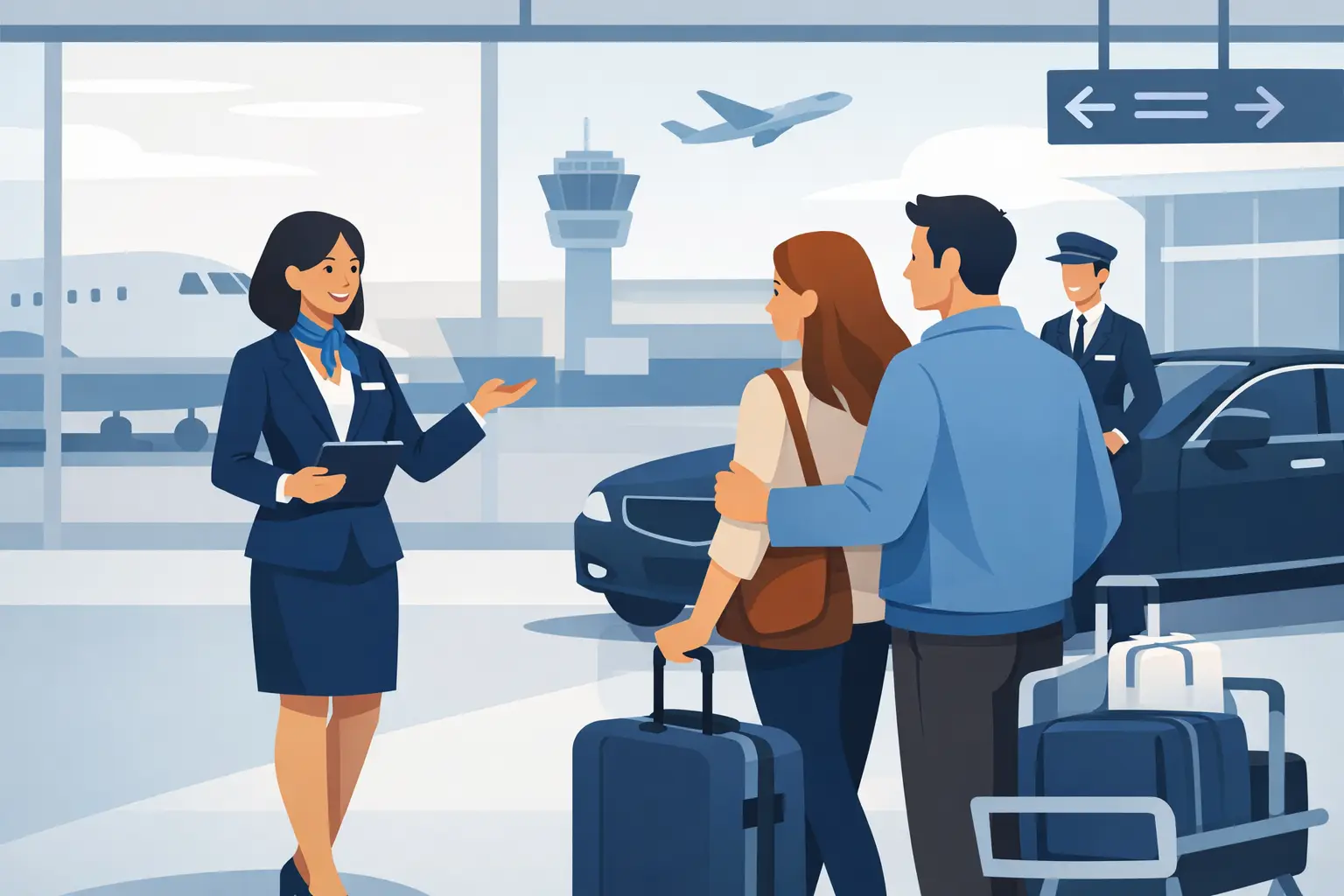
    For premium travelers, the value is not just being picked up. It is being expected. A professional chauffeur tracks the flight, adjusts for delays, positions at the correct terminal, and welcomes the passenger in person. That single change turns an airport transfer from a basic transport task into part of the travel experience itself.

    What a meet & greet service at the airport actually includes

    At its core, a meet & greet service at the airport means the chauffeur or designated host meets the traveler inside the airport or at a clearly defined arrivals point, rather than waiting somewhere outside with minimal contact. In premium service, that greeting is handled with discretion, punctuality, and attention to protocol.

    The details matter. A quality service will monitor the flight in real time, know whether the passenger is arriving from a domestic or international route, and understand the correct meeting point for that terminal. The chauffeur typically assists with luggage, confirms the onward journey, and escorts the passenger directly to the vehicle.

    For departures, the service can be just as valuable. Instead of being dropped at the curb with the rest of the traffic, the traveler is accompanied through a more organized handoff. That is especially useful for executives, older passengers, families with children, or guests unfamiliar with the airport.

    There is, however, a difference between a basic meet-and-collect arrangement and a true premium reception. Some operators use the phrase loosely. In practice, the passenger may still need to call on arrival, search a parking zone, or wait while the driver circles outside. That is not the same experience.

    Why premium travelers choose it

    Time is one reason, but not the only one. The real advantage is control. After a flight, most people do not want to negotiate unclear pickup instructions, crowded taxi ranks, or inconsistent service standards. They want the next stage of the journey handled with the same care as the flight itself.

    For corporate clients, image matters too. When an executive, client, or board member arrives, the reception should feel considered and professional. A meet & greet service sends a clear message that logistics have been handled properly. It reduces friction, protects schedules, and reflects well on the company or assistant who arranged it.

    For leisure travelers, the appeal is different but no less practical. Couples arriving for a wine itinerary, families landing with several bags, or international visitors unfamiliar with local transport often want calm rather than improvisation. A refined arrival sets the tone. There is no need to queue, negotiate, or guess.

    That said, not every trip requires this level of service. If someone is traveling light, knows the airport well, and is simply looking for the lowest-cost ride, a standard pickup may be enough. Meet & greet is best understood as a service for travelers who prioritize reliability, comfort, and presentation over bare-minimum transport.

    The difference between meet & greet and a standard airport pickup

    A standard airport pickup usually begins once the passenger has already made it outside. The driver may wait in a parking area or designated lane and call the traveler when they land. This model can work, but it places more responsibility on the passenger. They must orient themselves, manage luggage, identify the correct exit, and coordinate timing while surrounded by airport traffic.

    Meet & greet shifts that responsibility away from the traveler. The chauffeur is present at the agreed point, ready to receive the passenger and guide the transition from terminal to car. It is a quieter, more composed process.

    The distinction becomes more significant in busy airports such as Madrid or Bilbao, where terminal layouts, traffic restrictions, and high passenger volume can make even a simple pickup less straightforward than expected. In those environments, in-person reception is not a luxury for its own sake. It is often the most efficient option.

    Vehicle quality also changes the experience. A premium chauffeur service with a Mercedes-Benz Clase S, Clase V, or electric EQ model offers a very different arrival from a conventional taxi queue. Space, privacy, ride quality, and presentation all influence how the passenger feels in the first 30 minutes after landing. For many clients, that part is not decorative. It affects whether they arrive rested, prepared, and on schedule.

    Who benefits most from airport meet & greet

    Business travelers are the clearest fit. They often land with calls to make, meetings to reach, or guests to host. Removing uncertainty from the airport arrival is a simple way to protect the day.

    Executive assistants and travel coordinators also value the service because it reduces avoidable variables. When arranging mobility for senior staff or international visitors, they do not want a transfer that depends on last-minute calls and guesswork. They want confirmation, protocol, and accountability.

    Families and small groups benefit for another reason: logistics. Children, strollers, checked luggage, and tired passengers can make a routine airport exit feel longer than the flight. Having a chauffeur waiting, helping with baggage, and escorting everyone to a spacious vehicle changes the pace completely.

    Then there are premium tourism clients. In a destination-led itinerary, whether focused on gastronomy, wineries, or a special celebration, the airport transfer is often the first live impression of the trip. A polished meet & greet establishes the level of service from the start.

    What to look for before booking

    The phrase sounds straightforward, but standards vary. The first thing to check is whether the operator includes true in-terminal reception or simply labels an outside pickup as meet & greet. If the description is vague, ask exactly where the passenger will be met.

    Second, look at how the company manages flight tracking and waiting time. Delays happen. A premium provider plans for them rather than treating them as a problem the passenger must solve.

    Third, consider the vehicle and the chauffeur profile. For a high-level service, the driver should be professionally presented, discreet, and accustomed to premium clientele. Bilingual support can also make a difference, particularly for international guests.

    Finally, pay attention to consistency. The best airport service is not dramatic or overdone. It is precise. The vehicle is immaculate, communication is clear, and the traveler never has to wonder what happens next.

    When the service becomes especially valuable

    There are moments when meet & greet moves from preferable to essential. Late-night arrivals are one. So are early departures, multi-stop business days, and airport pickups for VIP guests or family members who may need extra assistance.

    It also becomes more useful when the airport is not the final destination but the beginning of a longer private transfer. Travelers landing in Bilbao, Zaragoza, Pamplona, or Madrid and continuing to La Rioja usually appreciate having the entire journey handled as one coordinated experience. The airport welcome, luggage assistance, and onward chauffeur service should feel like one continuous standard of care.

    This is where a specialist premium operator stands apart from general transport. RiojaBlack, for example, approaches airport arrivals as part of a broader first-class mobility experience, not as an isolated pickup. For the right client, that difference is immediately noticeable.

    The real value is peace of mind

    Luxury in ground transportation is often misunderstood as appearance alone. In reality, the strongest premium services are built on calm execution. The passenger does not need to call twice, search for a car, wait in a crowded lane, or explain the route after a long flight. Everything has already been prepared.

    That is the real appeal of a meet & greet service at the airport. It is not about excess. It is about arriving well, departing well, and keeping the standard of the journey intact from the moment the aircraft doors open.

    If your travel plans call for discretion, punctuality, and a more polished way to move, airport reception is one of the simplest upgrades you can make – and one of the few that you will feel immediately.