Egilea: RiojaBlack

  • Why Choose a Private Chauffeur Service Logrono

    Why Choose a Private Chauffeur Service Logrono

    A flight lands late in Bilbao, the meeting in Logroño starts early, and the margin for error is zero. That is exactly when a private chauffeur service Logrono makes the difference between simply getting there and arriving with complete control over time, comfort, and presentation.

    For travelers who are used to a higher standard, transportation is never just transportation. It affects the tone of a business trip, the pace of a wine country itinerary, and the experience of a wedding day or special event. A premium chauffeur service is not meant to compete with a standard taxi on price. It is designed for clients who value discretion, punctuality, polished service, and a vehicle that feels like an extension of a first-class hotel experience.

    What sets a private chauffeur service Logrono apart

    The distinction starts well before the journey begins. With a chauffeur-led service, booking is structured, expectations are clear, and the vehicle category is part of the experience rather than an afterthought. You know who is meeting you, what type of car will arrive, and how the route will be handled.

    That matters in Logroño and across La Rioja because many trips are not simple point-to-point rides. They often involve airport coordination, multi-stop winery visits, restaurant schedules, corporate appointments, or guests who expect a certain level of protocol. In those cases, reliability is not a luxury detail. It is the service itself.

    There is also a clear difference in atmosphere. A premium chauffeur vehicle is quiet, impeccably presented, and intended to let you work, rest, or simply enjoy the journey without friction. For executives, that may mean answering calls in privacy. For couples on a wine itinerary, it means moving between estates in comfort rather than watching the clock and managing logistics. For families or small groups, it often means having the space and calm that conventional transport rarely delivers.

    When a chauffeur service is the smart choice

    Some clients assume chauffeur service is only for major events or VIP travelers. In practice, it is often the most sensible option whenever timing, image, or comfort matter more than finding the cheapest available ride.

    Airport transfers are the most obvious example. Connections to Bilbao, Madrid, Zaragoza, or Pamplona can involve early departures, delayed arrivals, or guests coming from overseas. A well-run chauffeur service tracks timing, plans pickup windows carefully, and removes the uncertainty that tends to surround high-stakes travel days.

    Corporate mobility is another common use case. If you are receiving international clients, transporting senior leadership, or moving between meetings in different cities, the vehicle becomes part of your professional standard. Presentation counts. So does discretion. A chauffeur who understands protocol, remains measured in communication, and handles changes with composure is very different from a driver simply completing a fare.

    Then there is leisure travel, where the value is less about urgency and more about quality. La Rioja is best enjoyed without rushing, parking concerns, or route planning interrupting the day. A private chauffeur allows the itinerary to feel curated. Lunch can run longer. A tasting can become an extra stop. The day retains its elegance because someone else is responsible for timing, roads, and coordination.

    More than transport for winery and gastronomic travel

    Wine tourism tends to expose the limits of ordinary transport quickly. Distances between estates are manageable, but the real challenge is flow. Reservations are timed, tastings can shift, roads are often unfamiliar to international visitors, and the overall experience should feel relaxed rather than managed minute by minute.

    A chauffeur service works best here because it adds local judgment. The route between wineries is one part of the job. Understanding pacing, access points, and how to keep the day comfortable is another. The strongest providers are not simply driving guests from one address to another. They are supporting the rhythm of a premium day out.

    This is particularly valuable for couples and small private groups who want a refined experience without moving in a large organized tour. The vehicle remains private, the schedule remains yours, and the atmosphere stays personal. If the goal is to enjoy La Rioja at a high level, that privacy matters.

    The vehicle matters more than many clients expect

    People often focus first on the driver, but the vehicle itself shapes the journey in a very practical way. An executive sedan works well when privacy, quiet, and formal presentation are the priority. A premium van may be the better choice for families, corporate groups, or travelers with luggage and shopping. An electric luxury model can also be the right fit for clients who want comfort with a more contemporary profile.

    What matters is not just brand prestige, although that plays a role. It is the combination of ride quality, cabin silence, space, climate control, cleanliness, and how the car presents on arrival. A high-end Mercedes-Benz fleet signals consistency, and consistency is exactly what premium clients are paying for.

    There is a trade-off, of course. If your only concern is the lowest short-distance fare within the city, a chauffeur service may be more than you need. But that is rarely the comparison affluent travelers or corporate bookers are making. They are comparing confidence, comfort, and standards. In that comparison, the vehicle is not cosmetic. It is central.

    The role of the chauffeur, not just the driver

    The best chauffeur services are built around people as much as cars. A professional chauffeur is expected to be punctual, discreet, well presented, and calm under pressure. For international travelers, bilingual service is often another significant advantage, especially when airport arrivals, hotel communication, or schedule adjustments are involved.

    There is also an element of anticipation that separates premium service from basic transport. A strong chauffeur understands when conversation is welcome and when silence is preferable. They assist without becoming intrusive. They maintain protocol for corporate passengers and create ease for leisure guests. It is hospitality as much as mobility.

    This is where many premium clients notice the biggest difference. Luxury is not loud. It is measured. The car arrives spotless. The pickup feels orderly. Timing is respected. Luggage is handled properly. The route is smooth. You never feel like you are negotiating for service during the service.

    Choosing the right provider in Logroño

    If you are comparing options, look beyond the phrase luxury transport and ask a few sharper questions. Is the fleet truly premium and professionally maintained? Does the company handle airport transfers and regional long-distance routes regularly? Are chauffeurs experienced with business travel, winery circuits, events, and multilingual guests? Can they accommodate different passenger profiles, from solo executives to families or wedding parties?

    It also helps to look for a provider with deep local knowledge. In a region shaped by wine tourism, business travel, and intercity connections, local expertise saves time and improves the overall experience. A company such as RiojaBlack positions itself around that exact combination of high-end vehicles, professional chauffeurs, and first-class regional service.

    The right choice will depend on the purpose of the trip. A board-level airport transfer requires different strengths than a wedding itinerary or a full-day private wine tour. The strongest operators can handle all three without losing consistency in tone or execution.

    Why premium travelers keep booking chauffeur service

    Once clients experience a well-executed chauffeur journey, they tend to stop seeing it as an indulgence and start seeing it as a practical standard. That is especially true for people who travel often, entertain clients, or want their leisure time to feel protected rather than consumed by logistics.

    The value is not just in arriving. It is in arriving composed. It is in knowing the vehicle will match the occasion, the chauffeur will match the expectations, and the service will hold its standard from pickup to drop-off. That level of certainty is difficult to replicate with ordinary transport.

    In Logroño, where journeys often connect business, hospitality, gastronomy, and regional travel, that certainty carries real weight. The right car, the right chauffeur, and the right service structure turn travel time into part of the experience instead of a gap between plans. If the day matters, the way you move through it should reflect that.
  • Descubrir La Rioja con Seguridad y Exclusividad: La Importancia de Elegir un Transporte Legal

    Cuando planificas una visita a La Rioja, ya sea por negocios o para sumergirte en la cultura del vino, buscas que cada detalle sea perfecto. La tranquilidad, el confort y la exclusividad son elementos innegociables para disfrutar de nuestros paisajes y bodegas. Sin embargo, hay un aspecto fundamental que a menudo pasa desapercibido a la hora de contratar traslados o rutas guiadas: la legalidad del transporte.

    ​En RiojaBlack, como empresa de vehículos de transporte con conductor (VTC) de lujo, creemos que la excelencia no solo se demuestra en la calidad de nuestros vehículos o en el trato exquisito de nuestros chóferes, sino en el estricto cumplimiento de la ley para garantizar tu absoluta protección.

    ​A continuación, te explicamos por qué es vital asegurarte de que contratas a un profesional autorizado y cómo evitar caer en las trampas del transporte ilegal.

    El falso “guía-chófer”: Una práctica de riesgo

    En los últimos años, ha proliferado en nuestra región una práctica preocupante. Muchos supuestos “guías turísticos” o empresas de ocio ofrecen paquetes de visitas a bodegas que incluyen el desplazamiento en sus vehículos particulares o furgonetas privadas.

    ​Lo que muchos visitantes desconocen es que, si no disponen de una autorización de transporte (Taxi o VTC), están operando en la absoluta ilegalidad. Ejercer de guía turístico no otorga, bajo ningún concepto, el derecho a transportar pasajeros con fines comerciales.

    Los graves riesgos de viajar en un vehículo no autorizado

    Contratar un servicio ilegal no solo fomenta la competencia desleal, sino que te expone a ti y a tus acompañantes a riesgos muy serios:​

    • Ausencia total de cobertura de seguro: Los vehículos particulares tienen pólizas de seguro estándar. En caso de accidente, si la aseguradora descubre que el conductor estaba realizando una actividad económica encubierta e ilegal, el seguro se inhibirá por completo. Los pasajeros quedarían desamparados, sin cobertura médica ni indemnización por daños.
    • ​Inmovilización policial y viajes arruinados: Las Fuerzas y Cuerpos de Seguridad del Estado (como la Guardia Civil o la Policía Local) realizan controles exhaustivos en carreteras y accesos a bodegas para detectar este tipo de intrusismo. Si detienen a un conductor ilegal, el vehículo es inmovilizado en el acto. Esto significa que te quedarás tirado en mitad de la ruta, perdiendo tus reservas y arruinando tu experiencia, además de verse envuelto en un desagradable proceso policial.​
    • Falta de garantías profesionales: Un conductor sin licencia no ha pasado los controles médicos, penales y de idoneidad exigidos por la administración para el transporte de pasajeros.

    ​¿Cómo comprobar que viajas en un transporte legal?

    Identificar a un profesional autorizado (Taxi o VTC) es más sencillo de lo que parece. Como cliente, tienes todo el derecho a exigir y comprobar estos elementos:​

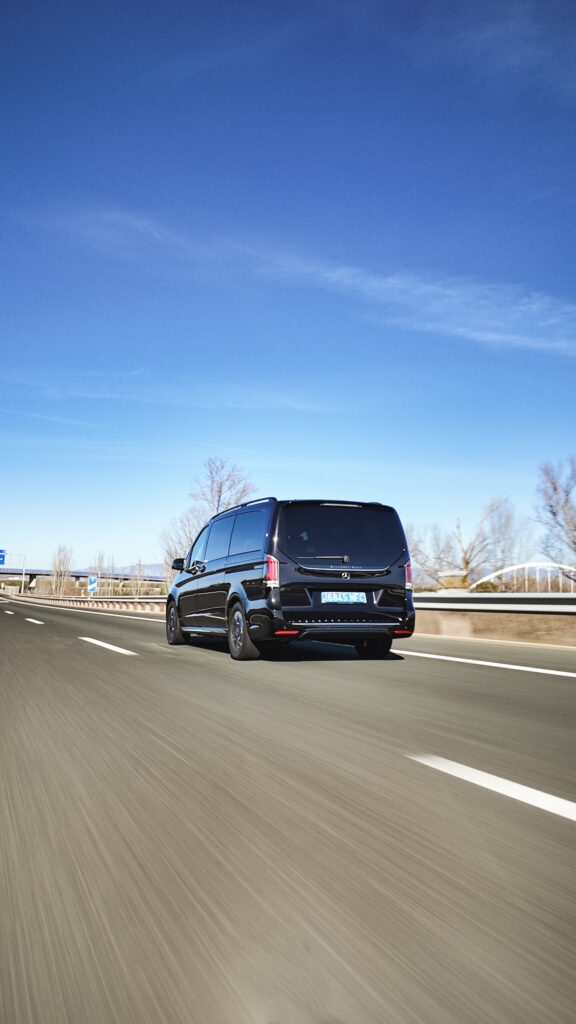
    • La placa de matrícula trasera azul: Por normativa, en España, todos los vehículos dedicados al transporte público de viajeros hasta 9 plazas (tanto Taxis como VTC) deben llevar obligatoriamente la matrícula trasera de color azul con los números y letras en blanco. Si el coche tiene la placa trasera blanca, es un vehículo particular operando ilegalmente.​
    Furgoneta Mercedes Clase V negra de RiojaBlack circulando por carretera para el servicio de chófer a disposición en La Rioja.
    Libertad para explorar La Rioja a tu ritmo. RiojaBlack, VTC en La Rioja.
    • Consulta en el Registro Oficial: Las autorizaciones son públicas. Puedes verificar si la empresa o el vehículo están inscritos en el Registro General de Transportistas (REAT) a través de la página web oficial del Ministerio de Transportes.
    • Distintivos VTC: Los vehículos de alquiler con conductor deben llevar pegatinas identificativas (distintivos autonómicos) visibles en la parte delantera y trasera del coche, certificando su autorización.

    La promesa de RiojaBlack: Tu tranquilidad es nuestro mayor lujo

    En RiojaBlack, el lujo va mucho más allá de viajar en un vehículo premium. El verdadero lujo es poder relajarte por completo, sabiendo que estás en manos de profesionales acreditados, con todas las autorizaciones en regla y con seguros de responsabilidad civil específicos que protegen hasta el último detalle de tu viaje.​

    No dejes tu seguridad ni tu tiempo al azar. Cuando visites La Rioja, exige la matrícula azul, exige profesionalidad y exige viajar con la tranquilidad que solo un servicio VTC legal te puede ofrecer.

    ​¿Listo para descubrir La Rioja con la elegancia y seguridad que mereces? Contáctanos en RiojaBlack y diseñaremos tu ruta perfecta.

  • Private Taxi Service in Logroño, Upgraded

    Private Taxi Service in Logroño, Upgraded

    A late flight into northern Spain, a board meeting the next morning, and a transfer that cannot go wrong – this is where a private taxi service in Logroño stops being a convenience and starts becoming part of the plan. For travelers who value timing, discretion, and comfort, the real question is not how to get from point A to point B. It is how well the journey is handled.

    In Logroño, transport options vary widely. A standard cab may be enough for a short city ride. But airport connections, winery itineraries, executive schedules, weddings, and full-day private travel call for a different standard. The difference is not only the vehicle. It is the way the service is designed around the passenger.

    What a private taxi service in Logroño should actually deliver

    The phrase can mean many things. Some travelers use it to describe any pre-booked ride. In premium travel, though, it should mean a professionally managed chauffeur service with clear standards, high-end vehicles, and a level of hospitality that feels closer to first-class travel than ordinary local transport.

    That matters in Logroño because the city often works as a gateway rather than a final stop. Visitors arrive for business in La Rioja, continue on to wineries in the surrounding countryside, or connect with airports in Bilbao, Madrid, Zaragoza, or Pamplona. These are not casual journeys where flexibility and presentation are optional. They require planning, local knowledge, and the ability to adapt without drama.

    A true premium service should begin before pickup. Booking needs to be straightforward, communication should be clear, and the service should be confirmed with the kind of precision busy travelers expect. If a flight is delayed, the response should be calm and already accounted for. If the day includes multiple stops, the driver should understand the route, the timing, and the tone of the occasion.

    Not all transport options are built for the same traveler

    There is nothing wrong with a conventional taxi when the need is simple. If you are leaving a restaurant and heading back to a hotel a few minutes away, speed and availability may be enough. But that logic breaks down when the trip affects your schedule, image, or overall experience.

    Business travelers usually care less about finding the cheapest ride than about arriving on time, stepping out of a vehicle that reflects their standards, and using travel time productively. Couples booking a winery day rarely want to think about driving, parking, road directions, or whether the return journey will be easy to arrange. Families and small groups often need space, reliability, and an environment that feels calm rather than improvised.

    This is where premium chauffeur travel separates itself. It offers consistency. The vehicle is reserved, the driver is assigned, the service is structured, and the client is not left negotiating the details in real time.

    When a private chauffeur makes the biggest difference

    Airport transfers are the most obvious case. A pickup from Bilbao or Madrid can involve long distances, shifting arrival times, and the need for an orderly welcome after a tiring journey. For international visitors especially, a bilingual driver and a polished meet-and-greet remove friction at exactly the moment when friction feels most exhausting.

    Wine tourism is another category where the gap becomes obvious. A day through Rioja wine country should feel elegant and unhurried. The value of private transport is not just safety, though that matters. It is the ability to enjoy tastings, move on schedule between appointments, and travel in quiet comfort through one of Spain’s most prestigious regions.

    Corporate mobility has its own priorities. Protocol, discretion, and punctuality are not extras in executive travel. They are the service. When moving a senior client, a visiting team, or a speaker for an event, transport becomes an extension of the company’s image. Details such as vehicle class, professional presentation, and invoice-ready administration carry real weight.

    Special occasions, especially weddings, also benefit from a more considered approach. Timing needs to be exact. Vehicles should look impeccable. The atmosphere should feel composed, not rushed. On a day built around memorable details, transportation should support the experience instead of introducing uncertainty.

    The vehicle changes the experience

    Premium ground transportation is often judged first by the car, and fairly so. The vehicle shapes comfort, privacy, and the overall impression of the service. Still, luxury is not about excess for its own sake. It is about appropriateness.

    For an executive transfer, a Mercedes-Benz S-Class gives the sense of quiet authority many clients want. For families, corporate groups, or couples traveling with luggage, a spacious premium van such as a Mercedes-Benz V-Class may be the smarter choice. Electric models also appeal to travelers who want refinement with a lower-emission profile, especially when sustainability is part of a company policy or a personal preference.

    The best service providers do not push one vehicle for every journey. They match the car to the itinerary. That sounds obvious, but it is often what separates a well-run premium operator from a generic transport company.

    The chauffeur matters more than the car

    A luxury vehicle without a professional chauffeur is only part of the equation. What discerning travelers remember is the handling of the service. Was the driver punctual without being intrusive? Did the conversation match the client’s mood? Was local knowledge helpful rather than performative? Did the entire ride feel calm, polished, and under control?

    This is especially important in a destination like La Rioja, where transport often overlaps with hospitality. A chauffeur may be the first person a traveler meets on arrival and the last person they see before departure. That interaction sets a tone.

    Professionalism also shows up in smaller details. Clean presentation, smooth driving, familiarity with hotels and wineries, discretion with high-profile clients, and the ability to communicate clearly in English all matter. They may not appear on a rate sheet, but they shape whether the experience feels ordinary or first class.

    How to choose the right private taxi service in Logroño

    If you are comparing providers, it helps to look beyond price. A lower fare can be attractive, but if the trip involves an airport, a business appointment, or a celebratory day in wine country, the cheapest option is rarely the best metric.

    Start with service model. Is this a true pre-booked private chauffeur operation or simply a ride provider using premium language? Then look at the fleet. Vehicle category says a lot about positioning, but so does whether the company specializes in executive and bespoke travel rather than trying to serve every market at once.

    Communication is another strong signal. Premium service should feel responsive, precise, and easy to coordinate. If you are arranging transport for a client, an executive, or a family celebration, vague replies are usually a warning. Good operators understand itineraries, adapt to changes, and confirm details with confidence.

    Finally, consider local expertise. The roads between city hotels, remote wineries, event venues, and regional airports are not all equal in timing or logistics. A chauffeur with deep regional knowledge adds value that goes well beyond driving.

    For travelers seeking that standard, RiojaBlack represents the premium end of the category – a service built around Mercedes-Benz vehicles, bilingual chauffeurs, and a hospitality-led approach designed for clients who expect more than a conventional taxi ride.

    Why premium transport is often the better value

    Luxury transport is not the right choice for every trip. If your needs are basic and flexible, a standard taxi may be perfectly reasonable. But for the trips that matter, value is measured differently.

    It includes the cost of missed time, the risk of poor coordination, the fatigue of unmanaged travel, and the impression created when the vehicle arrives. It also includes peace of mind, which is hard to quantify until the day becomes complicated and the service still runs smoothly.

    That is why affluent leisure travelers, executive assistants, and corporate bookers often return to the same premium provider. They are not only buying a ride. They are buying reliability with polish.

    In a place like Logroño, where business travel, wine tourism, and special occasions often intersect, transport should do more than move you. It should protect your schedule, elevate the experience, and leave the quiet sense that every detail was already handled.

  • Why a Private Driver for Wine Tours Matters

    Why a Private Driver for Wine Tours Matters

    A great wine itinerary can fall apart for reasons that have nothing to do with wine. The wrong pickup time, a rushed lunch, a designated driver who cannot relax, a car that feels ordinary after a private cellar tasting – these details change the day. That is why a private driver for wine tours is not an extra for travelers who value comfort and precision. It is often the difference between simply visiting wineries and experiencing the region properly.

    Wine travel tends to look effortless from the outside. A few tastings, a scenic route, maybe a long lunch, then back to the hotel. In practice, the day depends on timing, local road knowledge, reservation coordination, and the ability to move from one estate to the next without friction. For couples, families, and executive travelers, the transport choice shapes the entire tone of the experience.

    What a private driver for wine tours actually changes

    The obvious benefit is that nobody has to drive after tastings. That matters, but it is only the starting point. A private chauffeur changes the rhythm of the day. You are picked up on schedule, travel in a quiet and well-presented vehicle, and move through the region without checking maps, parking, or debating routes.

    For premium travelers, that reduction in noise is part of the value. A winery visit is rarely just transportation between points A and B. It is a hospitality experience. If the transfer feels improvised, the day loses consistency. If the service feels polished from the moment you leave your hotel, the entire itinerary feels more coherent.

    There is also the matter of flexibility. Wine days do not always run exactly to plan. A tasting may run longer because the host opens an additional vintage. Lunch may deserve another hour. A viewpoint may be worth a stop. With a private service, the day can adapt without becoming chaotic. That is very different from trying to manage a rigid schedule with standard transport.

    More than transport – it is part of the experience

    The best wine regions reward unhurried travel. Roads wind through vineyards, villages, and estates that are often outside town centers. Some of the most memorable wineries are not difficult to reach, but they are much better reached with someone who knows the area well and understands how wine tourism operates.

    This is where premium chauffeured service separates itself from a regular taxi. A taxi solves a trip. A private chauffeur manages the experience around the trip. That includes presentation, discretion, punctuality, and an understanding of the expectations that come with a high-end itinerary.

    For international visitors, this difference is even clearer. Language confidence, local familiarity, and calm coordination matter when reservations are time-sensitive and the day includes several moving parts. Business travelers extending a work trip with winery visits often value this especially. They do not want to switch from executive-level standards to improvised logistics just because the setting is more relaxed.

    Who benefits most from this kind of service

    Couples often choose a private driver because it protects the atmosphere of the day. Wine travel is meant to feel elegant, not operational. Nobody wants one person monitoring the time, limiting tastings, and thinking about the drive back.

    Small groups appreciate it for another reason. Coordinating multiple winery visits, lunch, and return transfers becomes much easier when everyone travels together in one premium vehicle with space, comfort, and a clear schedule. It keeps the group aligned without the stop-start feeling of multiple cars.

    Corporate guests and executive assistants usually look at it through a different lens. For them, image and reliability matter as much as comfort. If clients, leadership teams, or international partners are being hosted, the transport has to match the rest of the program. A polished vehicle, a bilingual professional chauffeur, and exact timing are not luxuries in that context. They are part of the standard.

    Families also find real value here, particularly when they want a refined day without compromising on convenience. Room for luggage, easy pickups, child seat coordination when needed, and a quieter pace all make the experience far more comfortable.

    What to look for when booking a private driver for wine tours

    Not every premium-looking service delivers the same level of execution. The vehicle matters, but the driver and the operating standard matter more. A late arrival, an unclear pickup point, or a driver unfamiliar with the day’s route can undermine an itinerary quickly.

    Start with professionalism. The chauffeur should be punctual, discreet, and used to serving guests who expect a hospitality-grade experience. For wine tours, local knowledge is especially valuable. Understanding distances between wineries, lunch timing, road conditions, and the pace of regional travel helps the day feel natural rather than forced.

    Vehicle quality should also reflect the type of experience you are booking. For a wine itinerary, comfort is not cosmetic. Supportive seating, a quiet cabin, climate control, and enough space for purchases all affect the day. Premium models such as Mercedes-Benz sedans, vans, or electric executive vehicles create a very different environment from standard transport.

    It also helps to ask how flexible the service is. Some travelers want a fixed route and exact timetable. Others prefer a more tailored day with room to adjust. Neither approach is wrong, but the service should fit your style. The right provider can operate with protocol-level precision while still allowing the day to breathe.

    The trade-off: is it always necessary?

    Not always. If your plan is one winery, a simple lunch, and a hotel nearby, a less tailored transport option may be enough. Travelers with very casual expectations may not care about presentation, cabin comfort, or itinerary management.

    But that changes once the day includes multiple stops, premium winery appointments, a celebratory occasion, or guests whose time and comfort matter. In those cases, choosing standard transport to save money can be a false economy. The cost difference is often small compared with the total investment in accommodations, reservations, wine purchases, and dining.

    There is also a less obvious trade-off. A private chauffeur removes decision fatigue. No one has to drive, navigate, park, monitor consumption, or manage timing under pressure. For many travelers, that ease is where the real value sits.

    Why the setting matters in wine regions

    Wine regions are not urban environments where transport is interchangeable. Distances between estates can be modest on paper but slower in practice. Rural roads, appointment-based visits, and destination restaurants require more coordination than many visitors expect.

    In places such as La Rioja, where the day may combine modern architectural wineries, historic cellars, village dining, and scenic drives through vineyard landscapes, mobility becomes part of the luxury. The route itself should feel composed. That is one reason premium travelers often prefer a dedicated chauffeur service over piecing together separate rides.

    Operators with strong regional knowledge can quietly improve the day in ways guests notice immediately. They know when to leave to avoid feeling rushed, which winery access points are most convenient, and how to keep the schedule elegant without making it feel strict. That sort of judgment is difficult to replicate with generic transport.

    The standard premium travelers usually prefer

    The audience that books first-class accommodations and carefully selected winery visits rarely wants an ordinary ride in between. They want consistency. The transfer should feel aligned with the tasting room, the lunch reservation, and the hotel arrival.

    That is where a company such as RiojaBlack fits naturally into the wine travel conversation. For guests seeking a refined private driver service, the difference is not only the Mercedes-Benz fleet or the bilingual chauffeurs. It is the service culture behind the drive – punctuality, discretion, polished presentation, and an understanding that wine tourism at this level is a hosted experience, not a basic transfer.

    A private driver for wine tours is, at heart, a choice about how you want the day to feel. Relaxed or managed. Elevated or merely functional. If the wine matters, the company matters, and the standard matters, the ride should reflect that from the first pickup to the final return.

  • Meet & Greet Service at the Airport Explained

    Meet & Greet Service at the Airport Explained

    A delayed flight, a crowded arrivals hall, and a driver you cannot immediately spot is not a minor inconvenience when you are traveling for business, arriving with family, or managing a tight itinerary. That is exactly why a meet & greet service at the airport matters. Done properly, it replaces uncertainty with clear coordination, polished reception, and a first-class transition from terminal to vehicle.

    For premium travelers, the value is not just being picked up. It is being expected. A professional chauffeur tracks the flight, adjusts for delays, positions at the correct terminal, and welcomes the passenger in person. That single change turns an airport transfer from a basic transport task into part of the travel experience itself.

    What a meet & greet service at the airport actually includes

    At its core, a meet & greet service at the airport means the chauffeur or designated host meets the traveler inside the airport or at a clearly defined arrivals point, rather than waiting somewhere outside with minimal contact. In premium service, that greeting is handled with discretion, punctuality, and attention to protocol.

    The details matter. A quality service will monitor the flight in real time, know whether the passenger is arriving from a domestic or international route, and understand the correct meeting point for that terminal. The chauffeur typically assists with luggage, confirms the onward journey, and escorts the passenger directly to the vehicle.

    For departures, the service can be just as valuable. Instead of being dropped at the curb with the rest of the traffic, the traveler is accompanied through a more organized handoff. That is especially useful for executives, older passengers, families with children, or guests unfamiliar with the airport.

    There is, however, a difference between a basic meet-and-collect arrangement and a true premium reception. Some operators use the phrase loosely. In practice, the passenger may still need to call on arrival, search a parking zone, or wait while the driver circles outside. That is not the same experience.

    Why premium travelers choose it

    Time is one reason, but not the only one. The real advantage is control. After a flight, most people do not want to negotiate unclear pickup instructions, crowded taxi ranks, or inconsistent service standards. They want the next stage of the journey handled with the same care as the flight itself.

    For corporate clients, image matters too. When an executive, client, or board member arrives, the reception should feel considered and professional. A meet & greet service sends a clear message that logistics have been handled properly. It reduces friction, protects schedules, and reflects well on the company or assistant who arranged it.

    For leisure travelers, the appeal is different but no less practical. Couples arriving for a wine itinerary, families landing with several bags, or international visitors unfamiliar with local transport often want calm rather than improvisation. A refined arrival sets the tone. There is no need to queue, negotiate, or guess.

    That said, not every trip requires this level of service. If someone is traveling light, knows the airport well, and is simply looking for the lowest-cost ride, a standard pickup may be enough. Meet & greet is best understood as a service for travelers who prioritize reliability, comfort, and presentation over bare-minimum transport.

    The difference between meet & greet and a standard airport pickup

    A standard airport pickup usually begins once the passenger has already made it outside. The driver may wait in a parking area or designated lane and call the traveler when they land. This model can work, but it places more responsibility on the passenger. They must orient themselves, manage luggage, identify the correct exit, and coordinate timing while surrounded by airport traffic.

    Meet & greet shifts that responsibility away from the traveler. The chauffeur is present at the agreed point, ready to receive the passenger and guide the transition from terminal to car. It is a quieter, more composed process.

    The distinction becomes more significant in busy airports such as Madrid or Bilbao, where terminal layouts, traffic restrictions, and high passenger volume can make even a simple pickup less straightforward than expected. In those environments, in-person reception is not a luxury for its own sake. It is often the most efficient option.

    Vehicle quality also changes the experience. A premium chauffeur service with a Mercedes-Benz Clase S, Clase V, or electric EQ model offers a very different arrival from a conventional taxi queue. Space, privacy, ride quality, and presentation all influence how the passenger feels in the first 30 minutes after landing. For many clients, that part is not decorative. It affects whether they arrive rested, prepared, and on schedule.

    Who benefits most from airport meet & greet

    Business travelers are the clearest fit. They often land with calls to make, meetings to reach, or guests to host. Removing uncertainty from the airport arrival is a simple way to protect the day.

    Executive assistants and travel coordinators also value the service because it reduces avoidable variables. When arranging mobility for senior staff or international visitors, they do not want a transfer that depends on last-minute calls and guesswork. They want confirmation, protocol, and accountability.

    Families and small groups benefit for another reason: logistics. Children, strollers, checked luggage, and tired passengers can make a routine airport exit feel longer than the flight. Having a chauffeur waiting, helping with baggage, and escorting everyone to a spacious vehicle changes the pace completely.

    Then there are premium tourism clients. In a destination-led itinerary, whether focused on gastronomy, wineries, or a special celebration, the airport transfer is often the first live impression of the trip. A polished meet & greet establishes the level of service from the start.

    What to look for before booking

    The phrase sounds straightforward, but standards vary. The first thing to check is whether the operator includes true in-terminal reception or simply labels an outside pickup as meet & greet. If the description is vague, ask exactly where the passenger will be met.

    Second, look at how the company manages flight tracking and waiting time. Delays happen. A premium provider plans for them rather than treating them as a problem the passenger must solve.

    Third, consider the vehicle and the chauffeur profile. For a high-level service, the driver should be professionally presented, discreet, and accustomed to premium clientele. Bilingual support can also make a difference, particularly for international guests.

    Finally, pay attention to consistency. The best airport service is not dramatic or overdone. It is precise. The vehicle is immaculate, communication is clear, and the traveler never has to wonder what happens next.

    When the service becomes especially valuable

    There are moments when meet & greet moves from preferable to essential. Late-night arrivals are one. So are early departures, multi-stop business days, and airport pickups for VIP guests or family members who may need extra assistance.

    It also becomes more useful when the airport is not the final destination but the beginning of a longer private transfer. Travelers landing in Bilbao, Zaragoza, Pamplona, or Madrid and continuing to La Rioja usually appreciate having the entire journey handled as one coordinated experience. The airport welcome, luggage assistance, and onward chauffeur service should feel like one continuous standard of care.

    This is where a specialist premium operator stands apart from general transport. RiojaBlack, for example, approaches airport arrivals as part of a broader first-class mobility experience, not as an isolated pickup. For the right client, that difference is immediately noticeable.

    The real value is peace of mind

    Luxury in ground transportation is often misunderstood as appearance alone. In reality, the strongest premium services are built on calm execution. The passenger does not need to call twice, search for a car, wait in a crowded lane, or explain the route after a long flight. Everything has already been prepared.

    That is the real appeal of a meet & greet service at the airport. It is not about excess. It is about arriving well, departing well, and keeping the standard of the journey intact from the moment the aircraft doors open.

    If your travel plans call for discretion, punctuality, and a more polished way to move, airport reception is one of the simplest upgrades you can make – and one of the few that you will feel immediately.

  • Transporte ejecutivo La Rioja: qué esperar

    Transporte ejecutivo La Rioja: qué esperar

    A delayed pickup can derail an entire day. For a CEO heading to a board meeting, a couple arriving for a winery itinerary, or an assistant coordinating airport transfers for senior leadership, transportation is not a minor detail. In transporte ejecutivo La Rioja, the real difference is not simply getting from one address to another – it is arriving on time, in the right setting, with the right level of discretion and control.

    That distinction matters more in La Rioja than many visitors expect. This is a region where business travel, fine hospitality, wine tourism, and special events often overlap. A morning airport pickup may lead directly to a corporate lunch. An afternoon transfer may continue to a private tasting, then end at a Michelin-starred dinner. Standard transport can complete the route. Executive transport is designed to support the entire experience around it.

    What defines transporte ejecutivo La Rioja

    Executive ground transportation is often misunderstood as a more expensive version of a taxi. In practice, it serves a different purpose. The value is built around consistency, presentation, and planning.

    A premium chauffeur service should feel quiet, polished, and precise from the first contact. Booking is confirmed clearly. Pickup timing is managed with a margin for real-world travel conditions. The vehicle arrives immaculate. The chauffeur is professionally presented, measured in manner, and focused on the passenger rather than on the trip itself. For business travelers, that means fewer variables. For leisure clients, it means the journey feels part of the occasion rather than just logistics.

    In La Rioja, this becomes especially relevant because itineraries are rarely generic. Guests may need a transfer from Bilbao Airport to Logroño with a stop at a winery, or a full-day arrangement that combines business appointments with regional hospitality. A standard urban ride service is not built for that level of coordination. Executive mobility is.

    Why premium travelers choose it over a standard ride

    The most obvious difference is comfort, but comfort alone is not the real reason people book this category of service. They book it because image, timing, and reliability carry consequences.

    For corporate clients, the vehicle is often an extension of the meeting itself. When executives are collected in a premium sedan or luxury van, the impression is immediate. There is no confusion at the curb, no improvised routing, and no mismatch between the level of the traveler and the level of the transport. That matters for visiting investors, senior management, and international guests who expect protocol-driven service.

    For private clients, the benefit is more personal. After a flight into Madrid, Bilbao, Zaragoza, or Pamplona, the quality of the onward transfer shapes the entire arrival. A bilingual chauffeur, a refined cabin, climate control, room for luggage, and a calm drive through the region create a very different first impression from a rushed, transactional ride.

    There is also the issue of discretion. High-profile passengers, families, and couples celebrating special occasions usually do not want friction, attention, or unnecessary conversation. Good executive transport understands when to assist, when to provide local insight, and when silence is the most professional form of service.

    Airport transfers are where quality shows first

    Anyone can promise punctuality. Airport operations are where that promise is tested.

    A true executive airport transfer depends on monitoring, communication, and contingency planning. Flights arrive early, late, or at neighboring terminals. Luggage takes longer than expected. Passengers may need extra time, a meeting-point adjustment, or a second stop after arrival. If the service lacks structure, these small changes become stressful very quickly.

    With premium airport transportation, the process should feel controlled from start to finish. Pickup details are confirmed in advance. Arrival timing is tracked. The vehicle category matches the number of passengers and suitcases. If the traveler is continuing to a hotel in Logroño, a business address in the region, or directly to a winery estate, the route is prepared ahead of time.

    This is one area where the gap between ordinary service and first-class service becomes obvious. The best providers do not simply react when plans change. They anticipate the ways travel usually changes and absorb those adjustments without making them the passenger’s problem.

    Executive transport for wineries, gastronomy, and private touring

    La Rioja is not only a business destination. It is also one of Spain’s most refined leisure regions, which creates a different kind of demand for executive transport.

    Visitors planning winery visits, private tastings, long lunches, and countryside routes usually want more than a driver. They want local judgment, timing discipline, and a vehicle that suits the mood of the day. A luxury sedan may be perfect for a couple on a curated wine weekend. A premium van is often the better choice for families, small groups, or guests carrying purchases and luggage between hotels.

    There is a practical side to this as well. Wine tourism itineraries are rarely efficient if handled ad hoc. Distances are short on paper but the day can become fragmented if pickups, cellar visits, lunch reservations, and return timing are not aligned. Executive chauffeurs with local knowledge add value here because they understand the pace of the region. They know that a tasting can run long, that access roads to certain estates require careful routing, and that hospitality in La Rioja is best enjoyed without watching the clock every ten minutes.

    That said, not every winery outing requires the same service level. If the day is casual and budget is the priority, a simpler option may be enough. Executive transport makes the most sense when the occasion is elevated, the schedule is complex, or the travelers want the journey to match the quality of the destination.

    Corporate mobility needs protocol, not improvisation

    The phrase transporte ejecutivo La Rioja is especially relevant for companies that host visiting teams, clients, or board members. Corporate transportation is not just about moving people. It is about protecting schedules, standards, and brand image.

    An executive assistant arranging transport for senior personnel usually has three concerns: the car must arrive exactly when expected, the passenger experience must reflect company standards, and billing must be straightforward. If any one of those fails, the whole service feels unreliable.

    This is why professional chauffeur services tend to outperform standard ride options for corporate accounts. They operate with clearer reservation systems, higher presentation standards, and drivers trained for protocol. That includes greeting etiquette, route discretion, business-appropriate interaction, and the ability to adapt without creating noise around the change.

    For companies with recurring needs, consistency matters even more than luxury. The ideal service is not flashy. It is dependable, polished, and repeatable.

    The vehicle matters, but only if the service matches it

    Luxury vehicles are part of the promise, but they are not the whole promise. A premium badge on the hood means very little if the cabin is not spotless, the driving style is abrupt, or the service feels generic.

    In executive mobility, vehicle choice should match purpose. A Mercedes-Benz S-Class suits formal business travel, VIP guests, and occasions where presence matters. A Clase V is often the strongest option for airport transfers, small delegations, family travel, or winery touring because it combines space with a first-class feel. Electric models add another layer for clients who value quiet travel and a more modern expression of premium service.

    The trade-off is simple. Larger vehicles offer versatility and luggage capacity, while premium sedans offer a more intimate and elevated atmosphere. Neither is automatically better. The right choice depends on who is traveling, how long the journey is, and what kind of impression the service needs to create.

    How to choose the right executive transport provider

    For travelers comparing options, the key question is not who offers a car with a chauffeur. It is who manages the details that premium clients actually notice.

    Look at the service model, not just the rate. Is the company focused on private chauffeuring or does it operate like a standard transfer broker? Do they understand airport coordination, corporate protocol, and hospitality-level service? Can they accommodate bilingual communication if your guests are international? Are they used to winery itineraries, event transport, and high-expectation clients?

    It is also worth paying attention to how a provider describes itself. Businesses that position their service around luxury, discretion, and first-class travel generally understand that their role is broader than transport. They are shaping the passenger’s sense of time, comfort, and confidence throughout the day. That is the standard premium travelers should expect.

    A company such as RiojaBlack reflects that higher category when the need is not simply a ride, but a private chauffeur experience designed around executive standards, regional knowledge, and polished service.

    The best transport is often the part of the trip no one needs to think about once it begins. When every detail is handled properly, the passenger is free to focus on the meeting, the celebration, or the landscape outside the window.

  • Guía traslados Bilbao Logroño sin improvisar

    Guía traslados Bilbao Logroño sin improvisar

    Aterrizar en Bilbao y tener que resolver sobre la marcha cómo llegar a Logroño rara vez termina en una experiencia de primera clase. Entre esperas, combinaciones, horarios poco amables y la incertidumbre de si habrá disponibilidad, un trayecto que debería sentirse cómodo puede convertirse en una gestión incómoda. Esta guía traslados Bilbao Logroño está pensada para quienes valoran puntualidad, discreción y una experiencia a la altura del viaje.

    No todos los viajeros hacen este recorrido por la misma razón, y ahí está la primera diferencia importante. No es lo mismo un ejecutivo con agenda cerrada, una pareja que comienza una escapada enológica, una familia con equipaje voluminoso o un asistente que organiza la llegada de un cliente internacional. El mejor traslado no siempre es el más barato. Suele ser el que elimina fricción, protege el tiempo y mantiene el nivel de servicio esperado.

    Guía traslados Bilbao Logroño: qué conviene de verdad

    El trayecto entre Bilbao y Logroño ronda habitualmente las dos horas, aunque puede variar según tráfico, climatología, hora del día y punto exacto de recogida o destino. Sobre el papel parece simple. En la práctica, la experiencia cambia mucho según el tipo de transporte elegido.

    El coche de alquiler ofrece independencia, pero también traslada toda la carga operativa al viajero. Hay que pasar por mostrador o recogida, revisar el vehículo, conducir una ruta desconocida, gestionar peajes si aplica, repostaje, estacionamiento y devolución. Para un perfil vacacional muy autónomo puede tener sentido. Para quien aterriza tras un vuelo, viaja por trabajo o simplemente quiere llegar descansado, no suele ser la opción más refinada.

    El transporte público puede encajar si la prioridad absoluta es reducir costo y se acepta perder flexibilidad. El problema es que normalmente exige combinar horarios, adaptarse a frecuencias y asumir tiempos muertos. Si el vuelo llega con retraso o si el destino final no está en el centro de la ciudad, la ventaja económica empieza a diluirse.

    El taxi tradicional resuelve la urgencia inmediata, pero no siempre garantiza el nivel de consistencia que buscan clientes premium o corporativos. Disponibilidad, tipo de vehículo, espacio real para equipaje, idioma del conductor o experiencia en recepción aeroportuaria son variables que importan más de lo que parece cuando el viaje debe salir bien a la primera.

    Por eso el traslado privado con chófer se ha convertido en la elección natural para un segmento muy concreto: viajeros que no quieren simplemente llegar, sino hacerlo con tiempo controlado, atención cuidada y un estándar superior al transporte convencional.

    Cuándo un traslado privado marca la diferencia

    Hay trayectos en los que pagar por confort es un capricho. Este no siempre lo es. Si el vuelo aterriza temprano, tarde o con margen ajustado hacia una reunión, una recogida planificada evita improvisaciones. Si viajan dos o tres personas con maletas, la comodidad de un vehículo amplio deja de ser un extra y pasa a ser parte del servicio.

    También cambia mucho la experiencia cuando Bilbao es solo la puerta de entrada a una agenda más ambiciosa. Muchas llegadas no terminan en Logroño capital. Continúan hacia un hotel boutique, una finca, una bodega o una reunión en Rioja Alavesa. En esos casos, la coordinación del trayecto importa tanto como el trayecto mismo.

    Para perfiles internacionales, además, el idioma y la familiaridad local cuentan. Un conductor bilingüe que entiende tiempos, protocolo de recepción y expectativas de hospitalidad ofrece algo que no aparece en una tarifa cerrada, pero sí se nota en cada detalle.

    Lo que debería incluir un servicio premium

    Un buen traslado privado entre Bilbao y Logroño no se define solo por el vehículo. Debe empezar antes, con confirmación clara, seguimiento del vuelo si la recogida es en aeropuerto, punto de encuentro bien indicado y comunicación profesional. Después vienen los elementos que realmente distinguen la experiencia: presentación impecable, conducción suave, silencio a bordo, climatización adecuada, espacio real y discreción.

    En viajes corporativos, además, hay un factor de imagen. Recibir a un directivo, un cliente o un invitado estratégico en un servicio cuidado transmite orden, respeto por su tiempo y atención al detalle. No es solo movilidad. Es parte de la experiencia de marca.

    Bilbao a Logroño: tiempos, comodidad y margen real

    Aunque muchas personas buscan una cifra exacta, conviene pensar este trayecto con un pequeño margen. En condiciones normales, la duración suele situarse alrededor de 1 hora y 50 minutos a 2 horas y 15 minutos. Si hay salida en hora punta, lluvia intensa o una llegada con desvíos logísticos desde el aeropuerto, conviene no planificar al minuto.

    Ese margen importa especialmente en tres escenarios. El primero es una reunión de negocio que no admite retrasos. El segundo, una reserva cerrada en restaurante o bodega. El tercero, un evento como una boda o una recogida de invitados con horarios encadenados. En todos ellos, la puntualidad no depende solo de salir temprano, sino de contar con una operación bien organizada.

    Aquí es donde un servicio premium aporta más valor que un simple traslado puerta a puerta. La experiencia consiste en anticipar incidencias, no en reaccionar tarde a ellas.

    Qué opción elegir según el tipo de viaje

    Si viajas solo, con equipaje ligero y sin compromiso horario estricto, puede que consideres alternativas más funcionales. Pero incluso en ese caso, conviene medir el costo total en tiempo, energía y previsibilidad, no solo en euros.

    Para parejas que llegan a disfrutar La Rioja, el coche con chófer suele encajar mejor desde el inicio. Permite comenzar el viaje con calma, sin mapas, sin conducción tras el vuelo y con posibilidad de enlazar directamente con hotel, comida o visita programada. El tono del viaje cambia por completo.

    Para familias o pequeños grupos, el espacio interior es decisivo. Un vehículo amplio evita incomodidades, reduce estrés con el equipaje y permite que todos lleguen descansados. Si además hay niños o personas mayores, la diferencia entre un traslado correcto y uno excelente se nota desde el primer minuto.

    En contexto corporativo, la decisión suele ser todavía más clara. Un servicio ejecutivo aporta fiabilidad, facturación profesional, discreción y una presentación alineada con estándares empresariales. Para asistentes de dirección y equipos de office management, eso significa menos riesgo y menos incidencias que resolver.

    La diferencia entre transporte y experiencia

    Hay un punto que muchos viajeros descubren solo después de comparar. No están comprando un asiento; están comprando tranquilidad. Un traslado premium Bilbao-Logroño bien ejecutado elimina preguntas: quién espera, dónde espera, cuánto tarda, si habrá espacio, si el conductor conoce la ruta, si la llegada mantendrá el nivel que exige el viaje.

    Ese nivel también se percibe en el tipo de flota. No es igual viajar en un vehículo estándar que en un Mercedes preparado para servicio ejecutivo o premium tourism. El confort acústico, la calidad de la suspensión, la amplitud y la presencia importan. Para algunos clientes es una preferencia. Para otros, forma parte de su forma habitual de viajar.

    Por eso marcas especializadas como RiojaBlack no compiten realmente con un taxi convencional. Juegan en otra categoría, más cercana a la hospitalidad de alta gama y a la movilidad de representación que al transporte básico.

    Cómo reservar bien y evitar errores comunes

    Reservar este traslado con antelación suele ser la decisión más sensata, sobre todo en temporada alta, vendimias, fines de semana con eventos o fechas de mucho tráfico corporativo. Esperar al último momento limita opciones y obliga a aceptar lo disponible, no necesariamente lo adecuado.

    Al solicitar el servicio, conviene dar información precisa: número de pasajeros, maletas, hora real de aterrizaje, terminal si aplica, destino exacto y cualquier parada intermedia prevista. También merece la pena avisar si se necesita factura, atención en inglés o un vehículo con mayor capacidad.

    Un error frecuente es pensar que todos los traslados privados ofrecen exactamente lo mismo. No es así. Cambian la puntualidad, el protocolo de recogida, la preparación del conductor, el estado del vehículo y la forma en que se gestiona una incidencia. Si el objetivo es viajar en primera clase por carretera, el criterio no debería ser solo el precio.

    Guía traslados Bilbao Logroño para viajeros exigentes

    Quien viaja por placer busca que el trayecto acompañe el nivel del plan. Quien viaja por trabajo necesita eficiencia sin fricciones. Quien organiza el desplazamiento de terceros quiere cero sorpresas. En los tres casos, la clave es elegir un servicio que entienda que el traslado no es un trámite menor, sino la primera impresión del destino.

    Bilbao y Logroño están lo bastante cerca como para que el trayecto parezca sencillo, y lo bastante lejos como para que hacerlo mal pese mucho en el día. Cuando se reserva con criterio, el viaje gana en calma, puntualidad y presencia. Y eso, para cierto tipo de cliente, no es lujo accesorio. Es simplemente la forma correcta de moverse.

  • Cómo funciona un traslado aeropuerto premium

    Cómo funciona un traslado aeropuerto premium

    Hay una diferencia evidente entre llegar a un aeropuerto y estar simplemente recogido, o ser recibido como corresponde. Cuando alguien busca entender cómo funciona traslado aeropuerto premium, en realidad suele estar preguntando algo más profundo: qué cambia de verdad frente a un servicio convencional y por qué merece la pena.

    La respuesta no está solo en el vehículo. Está en la coordinación previa, en el nivel de puntualidad, en la forma de recibir al pasajero, en la discreción del chófer y en la tranquilidad de saber que cada detalle está previsto. Un traslado premium no empieza en la terminal. Empieza bastante antes.

    Cómo funciona un traslado aeropuerto premium desde la reserva

    El proceso comienza con una reserva planificada, no con una solicitud improvisada al aterrizar. El cliente facilita datos concretos como número de vuelo, hora prevista, terminal, cantidad de equipaje, número de pasajeros y destino final. En un servicio de primera clase, esta información no se pide por rutina, sino para diseñar una operativa precisa.

    Ese detalle previo permite asignar el vehículo adecuado. No es lo mismo un ejecutivo que viaja solo con equipaje de mano que una familia que aterriza con varias maletas, o una pareja que desea iniciar un recorrido enológico con máxima comodidad. La elección entre una berlina de representación, un monovolumen premium o una opción eléctrica de alta gama cambia la experiencia por completo.

    También se define el tipo de recepción. Hay clientes que prefieren una recogida discreta en zona acordada y otros que valoran un meet and greet formal en llegadas, con el chófer esperando dentro de la terminal. En viajes corporativos, ese protocolo importa especialmente porque proyecta imagen, orden y profesionalidad.

    Qué ocurre antes de que aterrices

    Uno de los rasgos que mejor explica cómo funciona un traslado aeropuerto premium es que no depende solo de la hora teórica del vuelo. El seguimiento es dinámico. El operador o el chófer monitoriza incidencias, adelantos, retrasos y cambios de terminal para ajustar la recogida sin obligar al pasajero a gestionar nada a última hora.

    Ese punto marca una diferencia clara frente al transporte estándar. En un servicio convencional, el viajero suele asumir parte del estrés: avisar si se retrasa, buscar un coche disponible o esperar turno. En un traslado premium, la lógica es la contraria. El servicio se adapta al pasajero, no al revés.

    Además, el vehículo se prepara antes de la llegada. Limpieza impecable, climatización adecuada, espacio listo para el equipaje y una presentación cuidada del conductor forman parte del estándar. Puede parecer básico, pero en realidad es uno de los elementos que más valoran quienes viajan con frecuencia. Después de un vuelo, se nota enseguida cuándo un servicio está pensado para dar descanso y no fricción.

    La recogida en el aeropuerto: puntualidad, presencia y calma

    La recogida es el momento en el que todo se pone a prueba. Un traslado premium funciona bien cuando elimina la incertidumbre habitual del aeropuerto. El pasajero sabe quién le espera, dónde va a encontrarse con su chófer y qué vehículo le recogerá.

    Cuando el servicio incluye recepción en terminal, el conductor espera en el punto acordado con identificación visible y una actitud sobria, profesional y cortés. No hay prisas innecesarias ni una interacción forzada. Hay hospitalidad bien entendida. Para muchos viajeros internacionales y perfiles ejecutivos, ese equilibrio entre cercanía y discreción es esencial.

    Después llega la asistencia práctica. El chófer acompaña al pasajero, gestiona el equipaje y conduce hasta el vehículo mientras mantiene el ritmo que el cliente necesita. A veces se desea conversación. A veces, silencio. Un buen servicio premium sabe leer ambas situaciones sin que haga falta pedirlo.

    El trayecto: por qué no es solo “ir del punto A al punto B”

    La idea de que cualquier traslado cumple la misma función se cae en cuanto se compara la experiencia real. Un servicio premium convierte el trayecto en una extensión cómoda y controlada del viaje. Eso tiene valor para un directivo que necesita llegar despejado a una reunión, para una pareja que inicia una escapada especial o para una familia que no quiere resolver logística después de aterrizar.

    El vehículo influye, por supuesto. Suspensión, insonorización, amplitud interior y calidad de acabados elevan el confort de forma inmediata. Pero el verdadero diferencial está en la conducción. Debe ser suave, segura y estable. Sin acelerones, sin improvisaciones y sin la sensación de ir simplemente “cumpliendo carrera”.

    En ese contexto, un chófer profesional aporta mucho más que conocimiento de la ruta. Aporta criterio. Sabe cuándo conviene priorizar rapidez y cuándo conviene priorizar confort. Sabe moverse con soltura en accesos aeroportuarios, hoteles, bodegas, sedes corporativas y destinos donde la puntualidad o el protocolo no admiten margen de error.

    Cómo funciona un traslado aeropuerto premium para empresas

    En el ámbito corporativo, el servicio adquiere una dimensión adicional. No se trata solo de trasladar a una persona. Se trata de representar bien a una empresa, cuidar tiempos y proteger la agenda del pasajero.

    Por eso, los clientes corporativos suelen valorar aspectos muy concretos: facturación clara, reserva anticipada, capacidad de reacción, conductores bilingües y un nivel de presentación acorde al perfil del viajero. Si un consejo de dirección, un cliente internacional o un ponente llega a un destino importante, el transporte deja de ser un detalle secundario.

    También importa la consistencia. Un servicio premium debe ofrecer el mismo nivel en cada traslado, no solo en ocasiones puntuales. Esa regularidad es lo que permite a asistentes ejecutivos, departamentos de eventos y responsables de operaciones delegar con confianza.

    En trayectos entre aeropuertos y destinos de negocio del norte de España, o en conexiones más largas hacia hoteles, bodegas y espacios de eventos, esa fiabilidad se vuelve todavía más decisiva. El pasajero no quiere improvisación. Quiere saber que todo está bajo control.

    Cuándo merece la pena elegirlo y cuándo depende

    No todos los viajeros necesitan el mismo nivel de servicio. Esa es la parte honesta de la conversación. Si alguien prioriza exclusivamente el precio y no le importa esperar, compartir atención con otros pasajeros o asumir pequeñas incomodidades, quizá un traslado premium no sea su opción natural.

    Pero hay muchos escenarios en los que sí tiene sentido. Cuando se viaja con horarios ajustados, cuando el destino exige buena imagen, cuando se aterriza en una ciudad desconocida, cuando se viaja con niños o bastante equipaje, o cuando simplemente se quiere empezar y terminar el trayecto con calma. Ahí el valor deja de ser abstracto.

    También conviene entender que premium no significa ostentoso. A menudo significa justo lo contrario: menos ruido, menos fricción, más discreción. Para determinados perfiles, eso no es un extra. Es el estándar que necesitan.

    Qué distingue a un servicio realmente premium

    La etiqueta premium se usa con demasiada facilidad, así que conviene afinar. Un traslado aeropuerto premium no se define solo por un coche de alta gama. Se define por una cadena completa de detalles bien ejecutados.

    La puntualidad debe ser real, no publicitaria. La atención debe ser elegante, no invasiva. El vehículo debe estar impecable. El chófer debe conocer el protocolo, la ruta y el contexto del cliente. Y la experiencia debe sentirse fluida sin caer en la rigidez.

    Ahí está la diferencia entre un servicio caro y un servicio de primer nivel. Lo primero puede limitarse al precio. Lo segundo exige criterio, consistencia y cultura de hospitalidad. En una compañía especializada, como RiojaBlack, ese enfoque se traduce en traslados pensados para quien no busca un taxi mejorado, sino una solución de movilidad exclusiva y bien ejecutada.

    La verdadera ventaja: viajar con la mente despejada

    Al final, entender cómo funciona traslado aeropuerto premium es entender por qué algunas personas ya no quieren volver al transporte ordinario cuando viajan por trabajo, por placer o por una ocasión especial. No se trata de lujo entendido como exceso. Se trata de viajar en primera clase también en tierra.

    Porque cuando la recepción está coordinada, el coche es el adecuado, el chófer conoce su papel y el trayecto transcurre con silencio, confort y puntualidad, el traslado deja de ser un trámite. Se convierte en parte del viaje bien hecho.

    Y esa sensación, sobre todo después de aterrizar, vale más de lo que parece.

  • Traslado aeropuerto San Sebastián con chófer

    Traslado aeropuerto San Sebastián con chófer

    Hay viajes que empiezan bien antes del embarque. Cuando el horario es ajustado, se viaja con equipaje delicado, se aterriza tras una jornada exigente o se recibe a un cliente internacional, el traslado aeropuerto San Sebastián deja de ser un simple desplazamiento y pasa a formar parte de la experiencia. Ahí es donde se nota la diferencia entre llegar y llegar bien.

    En un entorno como el norte de España, donde conviven agendas corporativas, escapadas gastronómicas y rutas entre ciudades con perfiles muy distintos, elegir cómo moverse hacia o desde el aeropuerto de San Sebastián no es una cuestión menor. Para algunos viajeros, un taxi puede ser suficiente. Para otros, especialmente cuando hay imagen de empresa, necesidad de discreción o simplemente un estándar alto de confort, la elección lógica es un servicio con chófer privado.

    Qué esperar de un traslado aeropuerto San Sebastián premium

    Un servicio premium no consiste solo en un vehículo de gama alta. La diferencia real está en la suma de detalles que, cuando faltan, se echan de menos enseguida. Puntualidad, seguimiento del vuelo, recepción correcta, conducción serena, atención al equipaje y conocimiento preciso de la ruta son aspectos que marcan el trayecto.

    En un traslado de aeropuerto bien ejecutado no hay improvisación. El chófer conoce la hora prevista, se anticipa a posibles incidencias y adapta la operativa al tipo de cliente. No se gestiona igual la llegada de un directivo con poco margen que la de una pareja que inicia una estancia enoturística o una familia que necesita espacio y calma.

    También cambia la sensación a bordo. Frente al trayecto funcional y más impersonal de un servicio convencional, el viajero encuentra silencio, presentación impecable y una atmósfera de primera clase. Esa diferencia, que puede parecer sutil sobre el papel, resulta evidente en cuanto el coche arranca.

    Taxi, VTC o chófer privado: no todos los traslados son iguales

    A menudo se agrupan todas las opciones bajo la misma idea de “ir al aeropuerto”, pero no ofrecen lo mismo. El taxi responde bien a una necesidad inmediata y básica. Es práctico en ciertos escenarios, especialmente si la prioridad es resolver un trayecto corto sin más exigencias.

    El VTC premium y el servicio de chófer privado juegan en otra categoría. Aquí entran factores como la reserva previa, la calidad del vehículo, el protocolo de recogida, la estabilidad del servicio y la atención orientada al detalle. Para un traslado corporativo, una recogida de clientes, una ruta desde el aeropuerto hacia una bodega o un desplazamiento con varias paradas, esa diferencia importa.

    También importa la consistencia. En un servicio premium, el cliente sabe qué nivel de vehículo y de atención va a recibir. No depende del azar. Esa previsibilidad es valiosa para quien organiza viajes de empresa, coordina invitados o simplemente no quiere dejar un trayecto importante en manos de la disponibilidad del momento.

    Cuándo merece la pena reservar un chófer privado

    No todos los desplazamientos requieren el mismo nivel de servicio, pero hay situaciones en las que un chófer privado tiene mucho sentido. La primera es el viaje de negocios. Cuando hay una reunión al aterrizar, una agenda cerrada o la necesidad de proyectar una imagen cuidada, llegar en un vehículo premium con conductor profesional no es un lujo caprichoso, sino una decisión operativa.

    La segunda es el viaje de ocio de alto nivel. Quien llega al norte para disfrutar de gastronomía, hoteles singulares o visitas a bodegas suele valorar la comodidad desde el primer minuto. Evitar colas, esperas o soluciones improvisadas permite empezar el viaje con otro ritmo.

    La tercera tiene que ver con grupos pequeños y familias. Un vehículo amplio, bien mantenido y con espacio real para equipaje resuelve mejor el traslado que varias opciones fragmentadas. Además, cuando se viaja con niños, personas mayores o maletas voluminosas, la comodidad deja de ser un extra y se convierte en una necesidad.

    Del aeropuerto a reuniones, hoteles o bodegas

    El aeropuerto de San Sebastián funciona como punto de entrada para perfiles muy distintos. Algunos pasajeros continúan hacia reuniones en ciudades cercanas. Otros inician un recorrido privado por enclaves gastronómicos o enológicos. Otros, sencillamente, necesitan un traslado impecable al hotel sin perder tiempo ni energía en logística.

    En estos casos, el valor del chófer privado no termina en la recogida. Continúa en la lectura correcta del trayecto. Hay clientes que agradecen una conversación ágil y profesional. Otros prefieren silencio. Hay quien necesita una parada adicional, modificar el punto de destino o coordinar una recogida posterior. Un servicio premium está preparado para esa flexibilidad sin que el trayecto pierda elegancia ni precisión.

    Para quienes se desplazan entre San Sebastián y La Rioja, por ejemplo, el traslado deja de ser un enlace y se convierte en una transición cómoda entre dos experiencias muy distintas. Bien resuelto, ese trayecto permite trabajar, descansar o simplemente disfrutar del recorrido sin preocuparse por nada más.

    Qué debe ofrecer un buen servicio de traslado aeropuerto San Sebastián

    La puntualidad es la base, pero no basta. Un buen servicio debe incluir monitorización de vuelos para ajustar la recogida en caso de retraso o adelanto. Esto evita llamadas innecesarias y reduce la fricción en uno de los momentos más sensibles del viaje.

    La calidad del vehículo es el siguiente filtro. Un cliente premium espera limpieza impecable, climatización adecuada, espacio suficiente y una presentación a la altura. No se trata solo de marca, aunque una flota Mercedes-Benz proyecta inmediatamente otro estándar. Se trata de mantenimiento, comodidad de marcha y sensación de cuidado.

    El conductor también define la categoría del servicio. La profesionalidad se percibe en la forma de recibir, conducir y gestionar los tiempos. Un chófer bilingüe, discreto y conocedor de la zona aporta un valor claro, sobre todo con viajeros internacionales o con clientes que no quieren explicar cada detalle del trayecto.

    Y después está el factor menos visible, pero decisivo: el criterio. Saber cuándo esperar, cuándo tomar una ruta alternativa, cómo gestionar un acceso hotelero o cómo coordinar una recogida en un punto concreto del aeropuerto separa a un proveedor correcto de uno excelente.

    La experiencia a bordo también comunica

    En los desplazamientos ejecutivos, el transporte habla. Habla de la empresa que recibe, del nivel de organización y del respeto por el tiempo del pasajero. Una llegada cuidada transmite mucho antes del saludo inicial.

    Lo mismo ocurre en el ámbito privado. Una pareja que reserva una escapada especial no busca una solución estándar. Busca confort, calma y una experiencia coherente con el resto del viaje. Un traslado premium mantiene ese nivel desde la terminal hasta el destino final.

    Por eso muchas personas que podrían optar por una alternativa más simple eligen un servicio de primera clase. No siempre es por ostentación. A menudo es por eficiencia, por tranquilidad y por el deseo de eliminar puntos de fricción en un itinerario que ya tiene bastantes variables.

    Cómo elegir bien sin pagar por extras innecesarios

    Conviene distinguir entre lujo real y apariencia. Un buen servicio premium no necesita exagerar. Debe explicar con claridad qué incluye, qué tipo de vehículo asigna, cómo funciona la espera en aeropuerto y qué margen ofrece ante cambios de horario.

    También merece la pena valorar el contexto del viaje. Si se trata de un desplazamiento muy corto y sin exigencias especiales, quizá una opción básica sea suficiente. Pero cuando hay imagen, comodidad, equipaje, acompañantes o coordinación entre varios puntos, el servicio con chófer compensa claramente.

    La clave está en reservar con una empresa que entienda la movilidad como hospitalidad. Esa es la diferencia entre transportar y cuidar el trayecto. En ese terreno, firmas especializadas como RiojaBlack encajan especialmente bien con viajeros que esperan discreción, puntualidad y una ejecución impecable.

    Un traslado bien resuelto cambia todo el viaje

    El mejor traslado aeropuerto San Sebastián es el que reduce el ruido del viaje. No obliga al cliente a perseguir al conductor, no genera dudas al aterrizar y no añade tensión a una agenda ya exigente. Simplemente está a la altura.

    A veces la diferencia entre un trayecto correcto y uno excelente se resume en algo muy simple: sentirse atendido desde el primer minuto, sin tener que pedirlo. Cuando eso ocurre, el coche deja de ser solo un medio de transporte y pasa a formar parte del estándar con el que uno decide viajar.

  • Transporte para eventos corporativos premium

    Transporte para eventos corporativos premium

    Una acreditación mal entregada se puede reimprimir. Una sala se puede ajustar sobre la marcha. Pero cuando un ponente clave, un comité directivo o un grupo de invitados estratégicos llega tarde, desorientado o en vehículos que no están a la altura, el impacto se nota de inmediato. El transporte para eventos corporativos no es un detalle logístico más. Es una extensión directa de la organización, de su nivel de exigencia y de la imagen que proyecta ante clientes, socios e invitados.

    En entornos empresariales de cierto nivel, desplazarse bien no significa únicamente ir del punto A al punto B. Significa mantener horarios, cuidar el protocolo, reducir fricciones y ofrecer una experiencia coherente con el estándar del evento. Por eso muchas compañías ya no comparan este servicio con un taxi convencional, sino con una solución de movilidad de primera clase.

    Por qué el transporte influye más de lo que parece

    Un evento corporativo empieza antes de la recepción y termina después del cierre. Empieza cuando un invitado aterriza en el aeropuerto, cuando un consejero llega al hotel o cuando un equipo comercial se desplaza entre distintas sedes. En ese trayecto se construye una primera impresión silenciosa pero muy clara.

    Si el vehículo no aparece a tiempo, si el conductor no domina el protocolo o si el servicio carece de coordinación, esa fricción se traslada al resto de la jornada. En cambio, cuando el traslado está bien diseñado, todo fluye con discreción. El pasajero no tiene que preguntar, improvisar ni adaptarse. Simplemente se deja llevar.

    Ese matiz importa todavía más en congresos, reuniones de dirección, visitas institucionales, incentivos de empresa, jornadas en bodegas o citas con clientes internacionales. En estos contextos, la movilidad no solo resuelve una necesidad operativa. También comunica orden, previsión y nivel.

    Qué debe ofrecer un buen transporte para eventos corporativos

    Hay servicios que cumplen. Y hay servicios que representan a la empresa con la misma precisión con la que lo haría un buen anfitrión. La diferencia suele estar en los detalles, aunque detrás haya una operativa compleja.

    La puntualidad, por supuesto, es la base. Pero no basta con llegar a la hora exacta si no existe margen de anticipación, seguimiento de rutas o capacidad de reacción ante cambios. Un evento corporativo rara vez se desarrolla exactamente como estaba previsto. Se retrasa un vuelo, se alarga una comida, aparece una reunión no programada. El proveedor de transporte debe saber absorber ese movimiento sin convertirlo en un problema para el cliente.

    También cuenta la presentación. Vehículos impecables, interiores silenciosos, espacio suficiente para trabajar o descansar, climatización adecuada y una imagen cuidada que esté a la altura del contexto. Cuando la movilidad forma parte de una experiencia premium, el coche deja de ser un simple medio y pasa a ser parte del servicio.

    El conductor es otro punto decisivo. No se trata solo de conducir bien. Se trata de saber estar. Un chofer profesional entiende el valor de la discreción, conoce los tiempos del cliente, cuida la forma de dirigirse a cada pasajero y sabe cuándo intervenir y cuándo mantenerse en segundo plano. En eventos con perfiles directivos o internacionales, este criterio marca una diferencia real.

    Coordinación, protocolo y flexibilidad

    La parte visible del servicio es el vehículo. La parte crítica suele estar detrás. La planificación previa determina si el traslado será impecable o si dependerá de la suerte.

    En un evento corporativo bien gestionado, cada recogida tiene un horario validado, cada itinerario está revisado y cada punto de encuentro está definido con claridad. Si hay varios pasajeros, se diseñan rutas lógicas. Si hay invitados VIP, se establecen tiempos de cortesía y accesos discretos. Si existe agenda paralela, se coordina la movilidad con hoteles, restaurantes, recintos y aeropuertos.

    Aquí entra en juego el protocolo. No todos los pasajeros tienen la misma prioridad ni el mismo contexto. No se traslada igual a un comité ejecutivo, a un conferenciante internacional, a un equipo interno o a un cliente estratégico. El orden de recogida, el tipo de vehículo, el nivel de asistencia y hasta la forma de recepción deben adaptarse a cada caso.

    La flexibilidad también es esencial. Hay eventos en los que basta con una serie de traslados cerrados. En otros conviene contar con disponibilidad por horas, varios vehículos en paralelo o una combinación de berlina ejecutiva y monovolumen premium. La solución correcta depende del tipo de asistentes, del calendario y del nivel de representación que la empresa quiera proyectar.

    Cuándo un servicio premium marca la diferencia

    No todas las empresas necesitan el mismo despliegue, y conviene decirlo con claridad. Para un traslado puntual y sin implicaciones de imagen, una opción básica puede ser suficiente. Pero cuando hay reputación, hospitalidad o relaciones comerciales en juego, el estándar cambia.

    Sucede, por ejemplo, en eventos con dirección general, visitas de inversión, presentaciones de marca, reuniones con consejo, jornadas para clientes clave o experiencias corporativas en destinos de alto valor. En estos escenarios, el transporte debe estar alineado con el resto del evento: el hotel elegido, el restaurante reservado, la sala preparada, la atención recibida.

    En zonas como La Rioja, donde muchas empresas combinan agenda profesional con experiencias enoturísticas, comidas de representación o visitas a bodegas, esta coherencia es todavía más importante. El invitado puede pasar del aeropuerto a una reunión, y de ahí a una comida o una visita privada. Si cada trayecto cambia de nivel, el conjunto pierde consistencia.

    Por eso las compañías más exigentes prefieren trabajar con un único partner de movilidad capaz de cubrir toda la jornada con criterio ejecutivo, vehículos de alta gama y conocimiento local real. Ahí es donde un servicio como el de RiojaBlack encaja de forma natural: no como transporte aislado, sino como parte de una hospitalidad corporativa bien resuelta.

    Errores habituales al contratar transporte para eventos corporativos

    El más común es decidir solo por precio. Es una tentación comprensible, sobre todo cuando el evento tiene muchas partidas abiertas. Sin embargo, el ahorro aparente suele desaparecer en cuanto surge la primera incidencia: esperas, descoordinación, cambios mal gestionados o una experiencia por debajo de lo esperado.

    Otro error frecuente es contratar vehículos sin una figura clara de coordinación. Cuando hay varios pasajeros, horarios distintos o recorridos encadenados, hace falta control. Si nadie centraliza la operativa, cualquier ajuste se convierte en una cadena de llamadas y decisiones improvisadas.

    También se subestima a menudo el factor imagen. Un coche correcto no siempre es un coche adecuado. En determinados entornos, la categoría del vehículo, la limpieza, la uniformidad del servicio y la actitud del conductor forman parte del mensaje que la empresa envía. No es ostentación. Es coherencia con el nivel de la ocasión.

    Por último, conviene evitar proveedores que no conozcan bien el destino. El conocimiento local no es un adorno. Permite prever accesos, tiempos reales, alternativas de ruta y particularidades del entorno. En jornadas con agenda apretada, esa experiencia evita retrasos y reduce tensión.

    Cómo elegir bien el servicio

    La mejor elección no siempre es la más visible, sino la que transmite más control. Conviene preguntar cómo se gestionan los cambios de última hora, qué tipo de conductores realizan el servicio, si existe atención bilingüe, qué categorías de vehículos están disponibles y cómo se planifican recogidas múltiples.

    También es útil valorar la capacidad de adaptar el servicio al tipo de evento. No es lo mismo un transfer desde aeropuerto que una cobertura completa durante todo el día, ni un desplazamiento individual que la movilidad de un pequeño grupo directivo. Un proveedor solvente no ofrece una solución genérica. Ajusta el servicio al contexto.

    La facturación para empresa, la confidencialidad, la presentación profesional y la consistencia entre trayectos también deberían formar parte de la conversación inicial. Cuando estos elementos están resueltos desde el principio, el cliente puede centrarse en el evento y no en perseguir la operativa.

    Mucho más que mover personas

    En los mejores eventos corporativos, casi nadie piensa en el transporte. Y eso es precisamente una buena señal. Significa que todo ha sucedido como debía: a tiempo, con discreción, con comodidad y sin ruido innecesario.

    Ese es el verdadero objetivo. No llamar la atención, sino sostener la experiencia con elegancia. Cuando la movilidad se gestiona así, el invitado llega mejor, el organizador trabaja con más calma y la empresa proyecta exactamente lo que quiere proyectar.

    Elegir bien el transporte para un evento corporativo no consiste en contratar coches. Consiste en proteger tiempos, imagen y relaciones. Y cuando eso está en juego, la diferencia entre un servicio correcto y uno excelente se vuelve evidente desde el primer minuto.